Big tech giant Meta held a meeting with a Luxembourg civil servant to raise objections to EU laws concerning digital platforms and artificial intelligence, just weeks before the bloc decided to pause implementation of parts of its flagship AI legislation.
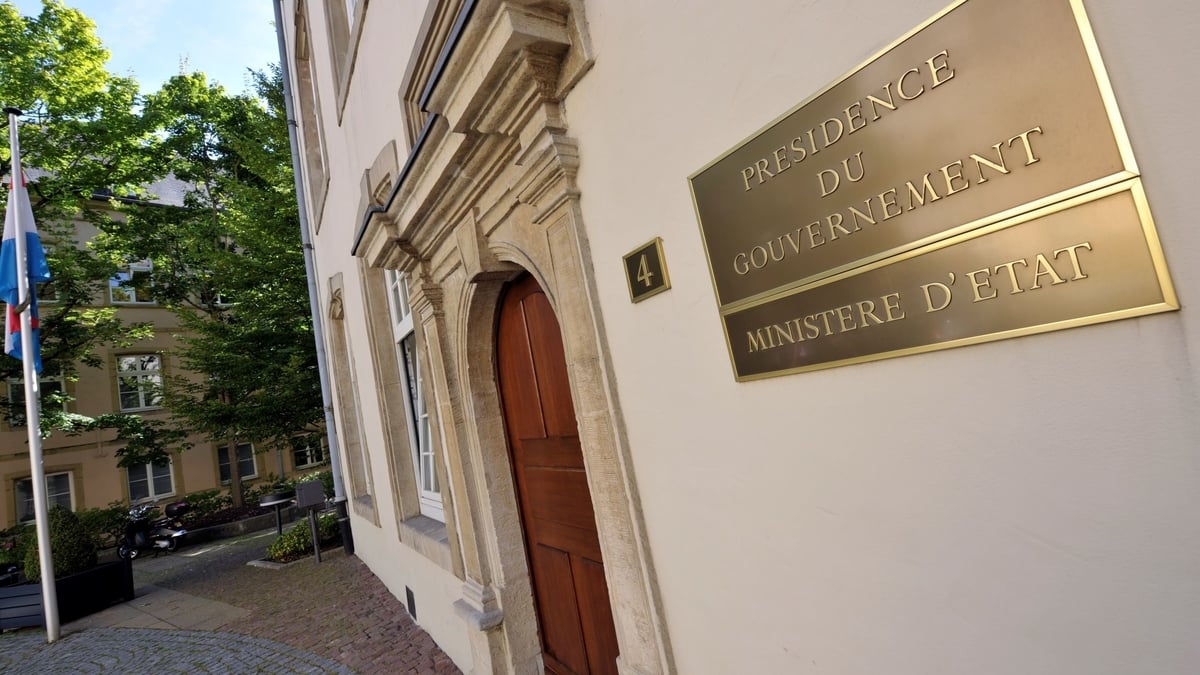
The video conference call took place on 15 October last year between representatives of Meta – the operator of Facebook, Instagram and WhatsApp – and a senior civil servant at the Ministry of State, according to a government register of meetings involving civil servants and external organisations.
The call came against a backdrop of pressure from US tech companies and the administration of President Donald Trump against EU rules being imposed on big tech companies, including the bloc’s AI Act, which was adopted in 2024.
The online meeting was “initiated by Meta”, a ministry spokesperson said in an email. It was the latest in a series of lobbying efforts by the big tech giant in the Grand Duchy, which had previously met with former environment minister and current Green deputy Joëlle Welfring at the end of 2024.
Luxembourg ministers discussed ‘difficult choices’ at meeting with Meta
The company also signed up to Luxembourg’s parliament lobby register in 2024, which at the time did not require any information on whether and when meetings with lawmakers took place, although this has since changed. There is no record of any meetings between Meta representatives and parliamentarians to date, since the new rules took effect in September 2025.
A note of the conference, published in the government’s register, stated that Meta “has advocated for a simplification of European digital legislation”, arguing that the current regulatory framework “prevents the EU from fully benefiting from advances in new technologies, particularly artificial intelligence.”
“Luxembourg representatives did not agree to advance any individual stakeholder’s position,” the ministry told the Luxembourg Times.
In the discussion, Meta reiterated its call for the repeal of Chapter V of the AI Act, which deals with general-purpose AI models, establishing strict prohibitions on models which are deemed as posing a “systemic risk”.
The big tech giant also urged a “freeze on new European legislative initiatives”, according to the record of the meeting.
Neither for nor against delay
After EU elections in 2024, which resulted in the most right-wing European Parliament in history, the European Commission began to gradually row back on some of the rules in its Digital Omnibus package, proposals to reduce and streamline EU tech regulations.
In November last year, just a month after the conference call between Luxembourg’s Ministry of State and Meta, the European Commission unveiled a proposal to delay some key provisions of the AI Act – which were due to take effect in 2026 – by more than a year.
The proposal has not yet been formally approved by EU legislators, but is expected to be later in the year and will mean that companies have more time to implement restrictions on the use of AI for assessing personal data, such as loan applications and CVs.
Any decision to delay the implementation of certain parts of the EU’s AI Act solely belongs to the European co-legislators
Ministry of State
“Luxembourg’s stance in EU discussions is formed through a balanced and comprehensive consideration of consulted views, national objectives and the overall European policy context,” the spokesperson added. “It should be clarified that any decision to delay the implementation of certain parts of the EU’s AI Act solely belongs to the European co-legislators.”
Luxembourg “fully supports the objectives of the AI Act” and was “not among the countries” which called for a delay to implementation of certain parts, the ministry spokesperson said. However, the government has also also “not opposed this approach”, they added.
A postponement “could offer the advantage of ensuring that the supporting regulatory framework is sufficiently developed to enable effective and compliant implementation before the corresponding legal obligations become applicable, thus providing greater legal certainty,” the ministry spokesperson said.
Meta did not respond to a request for comment from the Luxembourg Times.