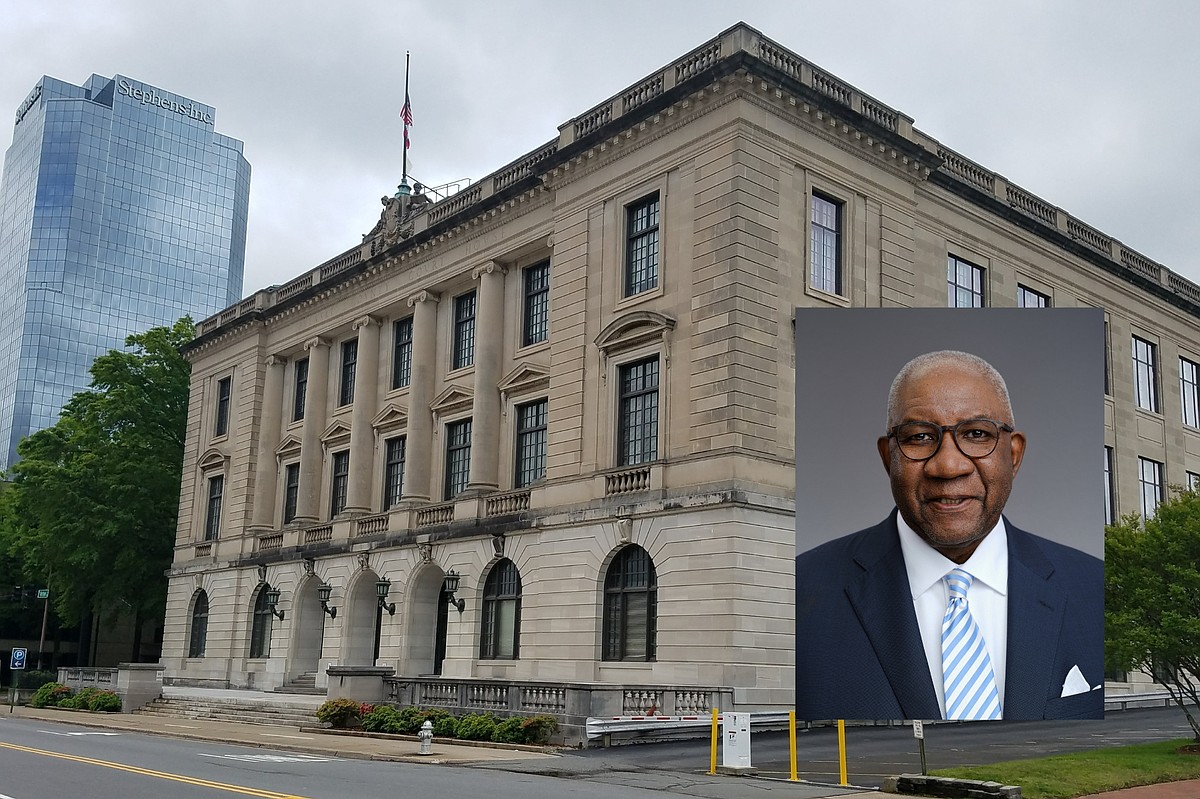
The board that runs Arkansas’ prison and parole systems has its first new chairman in two decades, and a majority appointed by Republican Gov. Sarah Huckabee Sanders.
The leadership change follows two years of public fights and litigation between Sanders and the seven-member panel that’s focused on who ultimately controls the state’s prisons. It also comes as she faces another potential debate in the Legislature over funding the 3,000-bed prison project in Franklin County.
The changes to the top spots of the corrections board has strengthened the spotlight on one of the most influential boards in state government.
Here’s what to know about the Board of Corrections and the changes it’s undergone:
What is the Board of Corrections?
The Board of Corrections is a seven-member board that oversees the Department of Corrections and its two main divisions: the Division of Correction, which manages state prisons, and the Division of Community Correction, which has oversight over people released on parole as well as people convicted of lower-level crimes who are sent to community correction centers.
The panel was created in 1943 as the State Penitentiary Board and was eventually renamed the Board of Corrections. An amendment to the state’s constitution voters approved the previous year gave the board independence from the governor or legislators abolishing it or transferring its powers.
Historically, the state’s top corrections officials have reported to the board, unlike many other agency leaders who report to the governor. Both divisions were separate agencies until a reorganization of state government under Sanders’ Republican predecessor, Asa Hutchinson, merged them into one department.
Two state laws signed by Sanders in 2023 attempted to change this by having the secretary of the Department of Corrections serve at the pleasure of the governor, with the division directors reporting to the secretary instead of the board. Those changes were struck down as unconstitutional by a state circuit court judge last year. Sanders has appealed that ruling.
Who has appointed the board’s members?
Four of the board’s seven members have been appointed by Sanders. Jamie Barker, Nathan Lee, Boyce Hamlet and Grant Hodges are her appointees. Lee Watson, Alonza Jiles and William “Dubs” Byers were all appointed or reappointed by Hutchinson.
Hamlet replaced Lona McCastlain as chair of the Post-Prison Transfer Board. McCastlain was reappointed to the Post-Prison Transfer Board by Sanders in 2024 and was made chair not long after. Unlike the chair of the Board of Corrections, who is chosen by a vote of board members, the chair of the Post-Prison Transfer Board serves at the pleasure of the governor.
Watson’s term is the next to expire, with it set to end at the end of 2026. Jiles’ and Byers’ terms expire at the end of 2027 and 2028, respectively.
How are board members selected?
Members of the board are appointed by the governor to seven-year terms, as required under Amendment 33, which also prevents the governor from firing members without cause.
One board member is required to be employed by a four-year university as a criminal justice faculty member. Lee, who began teaching at John Brown University this year as a distinguished guest lecturer, currently holds this position. Another position on the board is held by the chair of the Post-Prison Transfer Board.
What does the new makeup mean?
It’s still unclear how or if the priorities of the board’s new leadership differs from those of the board led by former chair Benny Magness, but the biggest immediate effects could be to its years-long legal fights with Sanders and Attorney General Tim Griffin.
While a Pulaski County Circuit struck down state statutes that took away the board’s authority over the Department of Corrections’ top three officials as unconstitutional, a legal fight over public records law violations related to the outside attorney it hired for the lawsuit is still ongoing. Sanders has also appealed the Pulaski County Circuit ruling to the Arkansas Supreme Court.
After Sanders’ appointees were voted into leadership positions, the board voted 4-3 to fire outside attorney Abtin Mehdizadegan over the objections of the other members. They also voted to pause any attempts to pay him.
Mehdizadegan has asked courts to withdraw as counsel for the board, and acknowledged in a letter that it had the power to fire him. But he said the board still owed him payment and criticized it for eroding “institutional integrity.”
Advocates for the Franklin County prison project may have a more outspoken ally in Barker as well. The new board chair made posts supportive of the controversial project on the social media platform X while still working for Sanders.