
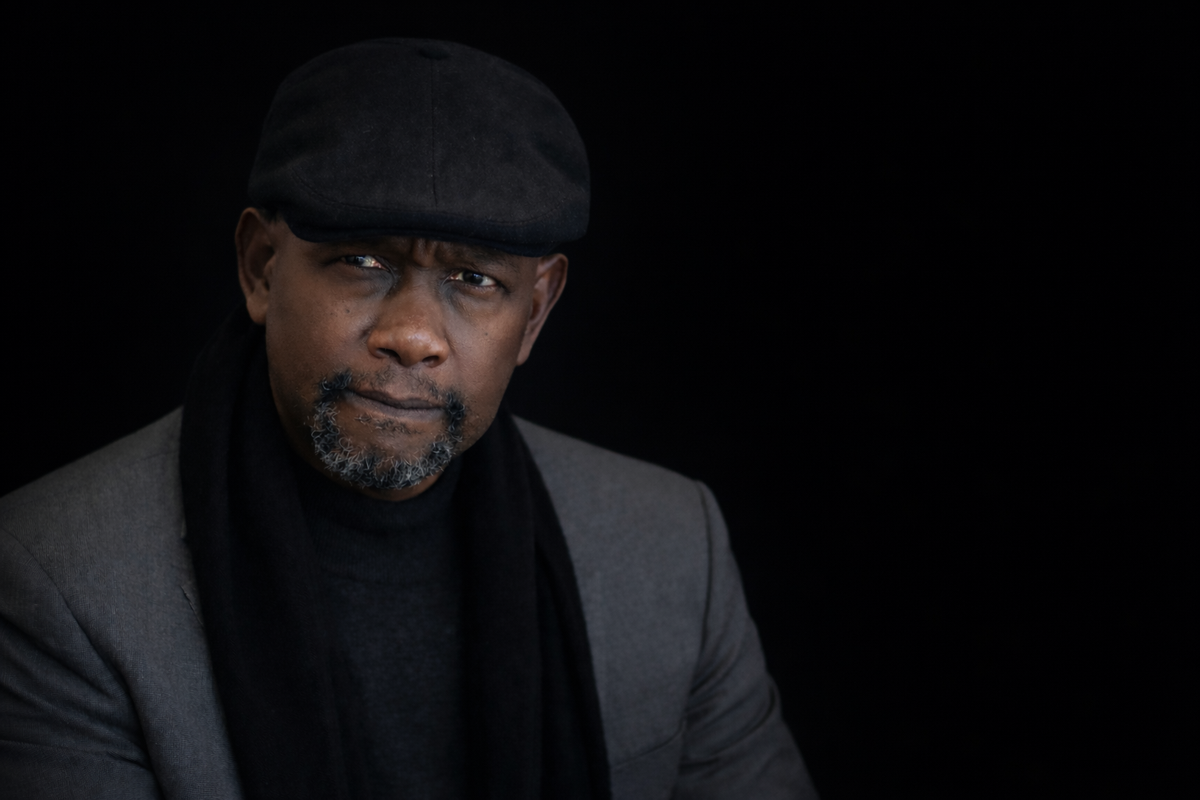
Mohloai Mpesi
THE Independent Electoral Commission (IEC)’s Director of Elections, Advocate Mphaiphele Maqutu, opted to quit his hugely influential position in the wake of tensions with the three newly appointed Commissioners of the electoral supervisory body, the Lesotho Times has learned.
Adv Maqutu’s Tuesday resignation came barely a day after the new commissioners assumed office. The Commissioners are Reverend Dr John Maphephe (chairman), Pontšo Mamatlere Matete and Dr Chelete Monyane (members).
Adv Maqutu will serve notice until 2 March 2026.
Sources close to developments at the IEC said Adv Maqutu’s sudden departure followed a tense engagement with the commissioners, who began their tenure by scrutinising his management decisions during their first official meeting with IEC executive heads.
The commissioners had queried several Adv Maqutu’s decisions including the employment of more than 20 temporary staff, “questionable” redeployments, alleged suspensions of permanent heads of departments without following due process, and alleged procurement irregularities.
The Commissioners also reportedly questioned allegations of nepotism, including claims that Adv Maqutu hired relatives and friends, among them his sister-in-law, and redeployed staff including the Senior Procurement Officer from IEC headquarters to a warehouse without clear justification.
Adv Maqutu has nonetheless denied all these allegations, insisting that his resignation was voluntary.
“I believe I have worked enough and I want to give other people a chance,” he said, dismissing claims of any confrontation with the Commissioners.
However, some sources believe his resignation was driven by his concerns over possible reprisals from Commissioner Matete, whom he suspended three months after assuming office in March 2022.
“Ntate Maqutu feared that the new commissioners would be influenced by M’e Matete to target him… In ‘M’e Matete’s viewpoint, Maqutu had been running the IEC like his own tuckshop, firing and redeploying staff without following IEC policies. She regarded herself as a victim of Maqutu. Now that ‘M’e Matete had returned as Maqutu’s boss, he knew it was time for karma,” a source said.
Adv Maqutu has vehemently denied allegations that he hired his “own people”, including his sister-in-law whom he had allegedly stationed in Mafeteng, and redeployed the Mafeteng station manager to the human resources department at headquarters.
Our sources said when the commissioners met with executive heads on Monday, Adv Maqutu told them he had heard of plans to fire him, noting that he still had 12 months remaining on his contract. The Commissioners reportedly dismissed the claim, explaining that their objective was to understand the institution’s operations and challenges.
Adv Maqutu had allegedly attempted to arrange a trip to Gauteng for the commissioners to meet one of the IEC’s suppliers, possibly on a familiarization tour, but the Commissioners declined, stating that they could not travel before fully understanding the state of the institution they had just inherited.
They further insisted that each section head present issues from their respective departments rather than receiving a consolidated briefing from the Director of Elections (Adv Maqutu).
During the meeting, the commissioners raised concerns over the high number of temporary staff and the suspension or redeployment of substantive position holders. They ordered the immediate dismissal of temporary staff, the reversal of redeployments, and the reinstatement of suspended staff, including Public Relations Manager Tuoe Hantši.
They also nullified all decisions taken by Adv Maqutu after the previous Commission’s term ended on 1 December 2025. The former Commissioners were Mphasa Mokhochane (chairperson), Karabo Mokobocho-Mohlakoana, and Tšoeu Petlane.
“That led to tension between him and the Commission, which I believe is the reason he opted to resign,” the source said.
Swearing-in
The trio was sworn in by Chief Justice Sakoane Sakoane at the High Court on Tuesday morning. Justice Sakoane urged them to remain resolute, warning that they would face numerous challenges in the execution of their duties.
“Taking an oath before assuming office is important because you swear before God and the public that you will do as you have pledged.
“This democratic country needs people of expertise. You should understand that you are holding the machinery of democracy. There are no clean elections without you. If elections are not clean, the blame rests with you. This means you must not be beholden to any interests — political, economic, social, religious or otherwise. Your conscience must guide you.
“You should not be afraid of anyone or intentionally hurt anyone. You must work without fear, favour or prejudice. That is the oath you take when assuming this office,” Justice Sakoane said.
He added that they should develop resilience.
“You must have thick skins. Many things will be said about you, good and bad. Remain focused.
“Do not fear anyone except God. I mean it, except God. When you do this work, fear only God because we are all equal before Him. Serve your nation diligently and remain faithful to the Constitution,” he said.
Action Plan
The three commissioners met with Adv Maqutu and IEC section heads on Monday to familiarise themselves with the operations and challenges facing the electoral body. They also introduced their 10-day orientation and induction programme, outlining their immediate action plan.
Their action plan is anchored on a clear mission: “to re-establish a credible, transparent and professional IEC capable of delivering free, fair and trusted elections by 2028, grounded in integrity, inclusivity and innovation”.
The plan begins with an intensive orientation programme aimed at ensuring continuity, institutional coherence and operational readiness. This will expose Commissioners to the IEC’s legal mandate, governance decisions, staffing capacity, electoral systems and stakeholder expectations.
It prioritises immediate interventions to address “operational, legal and credibility challenges”, including inconsistencies in voter rolls, disputes over proportional representation seat allocations, funding delays and declining public confidence.
The plan, of which the Lesotho Times was given a copy, also entails the legal and technical reform of voter registration, with commitments to fast-track the Electoral Register Bill, deploy real-time biometric verification, and maintain a clean, accurate and continuously updated voter register.
The commissioners further commit to transparent and accountable processes, strengthened strategic communication to counter misinformation, revitalised civic and voter education, and inclusive engagement with political parties, civil society and state institutions.
Overall, the action plan marks what the commissioners describe as a decisive shift towards a modern, transparent and citizen-centred electoral institution aimed at restoring public trust and safeguarding Lesotho’s democratic future.
Dismissals
Dr Maphephe said the commissioners had taken the strategic decision to dismiss temporary staff.
“In our engagement with the Director of Elections and section heads on Monday, we had to take swift strategic policy decisions to achieve institutional stability.
“We discovered that the Commission relied heavily on temporary staff while permanent staff were suspended for reasons that were unclear. It was also unclear why temporary staff were given decision-making authority.
“We released all temporary staff on three-month contracts so that we can reorganise and work through departmental managers with permanent contracts,” Dr Maphephe told the media after their swearing in ceremony on Tuesday.
He added that they were also concerned by questionable redeployments.
“We were confused by redeployments where people were assigned roles that did not match their qualifications. District offices are supposed to be supported by headquarters, not stripped of personnel.
“There were no procedures, policies or regulations supporting these decisions. We therefore resolved that all staff return to their original duty stations.
“We also summoned suspended permanent staff to understand the reasons for their suspension,” he said.
Dr Maphephe said it was during preparations to attend the High Court for their swearing in ceremony that they learned of Adv Maqutu’s resignation.
“As we were on our way here this morning, we received a resignation letter from the Director of Elections. He requested to meet us but did not state reasons for his resignation. We did not intend to expel anyone.
“Our main disagreement was that he wanted to brief us on all departments, whereas we wanted each head of department to present independently so that we could familiarise ourselves with the structure and personnel,” he said.
Matete’s story
Ms Matete, who previously served the Commission for 29 years, told this publication on Tuesday that she was suspended by Adv Maqutu just three months after his appointment in March 2022, allegedly over her refusal to release an office space to him.
Ms Matete, who was the Electoral Operations Manager at the time, said Adv Maqutu issued her with a show-cause letter and subsequently suspended her.
“I don’t know whether he thought I was a threat. He had arrived in March (2022) and after three months he suspended me, claiming insubordination.
“It was clear to me that he came with his own issues. I remember on his first day in office I was working from home, he called me to the office and said he was going to take action against me. I asked in what capacity he was going to do so because I didn’t know him and he didn’t know me. That’s when he introduced himself as Maqutu.
“I was in charge of operations and had secured an office for field staff so that when they arrived in Maseru they could work. He wanted that office, but I refused because those staff would struggle.
“After I refused, I was issued with a show-cause letter followed by a suspension. I went to court and won the case. When I returned to the office, he had assigned someone else to do my duties. I was essentially idle until I retired,” she said.
Asked whether Adv Maqutu feared retaliation from her following the alleged ill-treatment, Ms Matete said she was surprised by his resignation.
“We were surprised when he resigned today. It is true things became tense yesterday when we disagreed with the approach he wanted us to take, and his displeasure was visible.
“Elections happen in the districts, so how do you remove staff from districts and bring them to headquarters while leaving temporary staff behind? That chaos, coupled with nepotism, led us to resolve to dismiss all temporary staff until systems are corrected,” she said.
She added that they had requested a report on activities undertaken after the previous commissioners left office.
“He accused us of suggesting that the law had been violated. We clarified that we were not making that claim; we simply wanted information to enable informed decisions.
“When fixing institutional problems, you cannot target one person. I cannot personalise issues. The three of us work collectively and make decisions together. Even though he hurt me, I cannot act against him personally. We want things done legally and procedurally,” she said.
Human capital
Dr Monyane said capacitating temporary staff was neither sustainable nor strategic.
“There is something called human capital development. You cannot invest in innovation by capacitating temporary staff. We want to build capacity among permanent staff.
“There will be no witch-hunt. All contractual obligations will be honoured. We cannot terminate employment without respecting contracts,” he said.
Maqutu’s response
Adv Maqutu told the Lesotho Times yesterday that he resigned to allow others an opportunity to serve the institution.
“I feel I have done enough and decided to step aside so others can have a chance,” Adv Maqutu said.
He denied having any disagreements with the commissioners.
“I have never had heated debates with my bosses. They are my bosses and I cannot argue with them. They are new in office and I never disagreed with them.”
Asked whether he resigned to avoid possible retaliation from Ms Matete, Adv Maqutu dismissed the suggestion.
“People are not dismissed based on feelings but on wrongdoing. I don’t know what grounds she would have to fire me.
“There was never a time I disagreed with my bosses. I was there to listen, not to speak. Even those present will tell you that I never opened my mouth beyond greeting them.
“It is not my duty to argue with my bosses. They are mandated by the Council of State to administer the IEC. I respect that. When I left, I shook their hands and wished them well. I wish them every success,” he said.


