The fight against climate change is often framed as a sacrifice: eat less meat and drive less often. But those actions could also be framed positively: eat more plants and ride bikes more often. A new study finds presenting environmental action in a more proactive light makes people more likely to act and feel happier about doing it.
“Eating more plants, or using active transport like walking or biking has actually been shown to boost happiness among people,” study lead author Jade Radke, a Ph.D. student at the University of British Columbia in Canada, told Mongabay in a video call.
To compare how environmental messaging might impact behavior, Radke’s team surveyed participants online, posing 15 actions to 779 respondents. Roughly half responded to actions framed in a positive, “do more good” way, such as “increase your use of reusable products that last a long time.” The other half were asked a similar question framed in a “do less bad” way, like “decrease your use of single use products that are often thrown away.”
The study was then repeated with an additional 770 respondents. Participants rated, on an 11 point scale, how likely they were to take each action and how happy they expected it would make them feel.
After averaging the responses, the researchers found that participants were significantly more likely to say they would take actions when behaviors were framed as “do more good” rather than “do less bad.” The same pattern held for anticipated happiness: people expected to feel happier when actions were framed positively than when framed as a sacrifice. The same result held true in the repeated survey.
The one exception in both surveys was driving. When the people were asked about driving less — as compared to drive more people or carpool — the positive framing didn’t lead to more enthusiasm. Radke said she suspects people just don’t really like driving that much, so a suggestion to drive more with other people wasn’t well-received.
With the exception of driving, the study overwhelmingly found that advising people what they can do versus what they can’t was more likely to result in action.
“I think a lot of people are overwhelmed with the idea that they need to cut back on everything. They need to eat less meat and they need to shop less and they need to drive less and then they’re sort of left to figure out what they’re supposed to do instead,” Radke said. However, clear, actionable alternatives make it easier for people to engage, she said.
“My main focus is to really give people tangible ways that they can make a difference while adding to their lives instead of just taking away from it.”
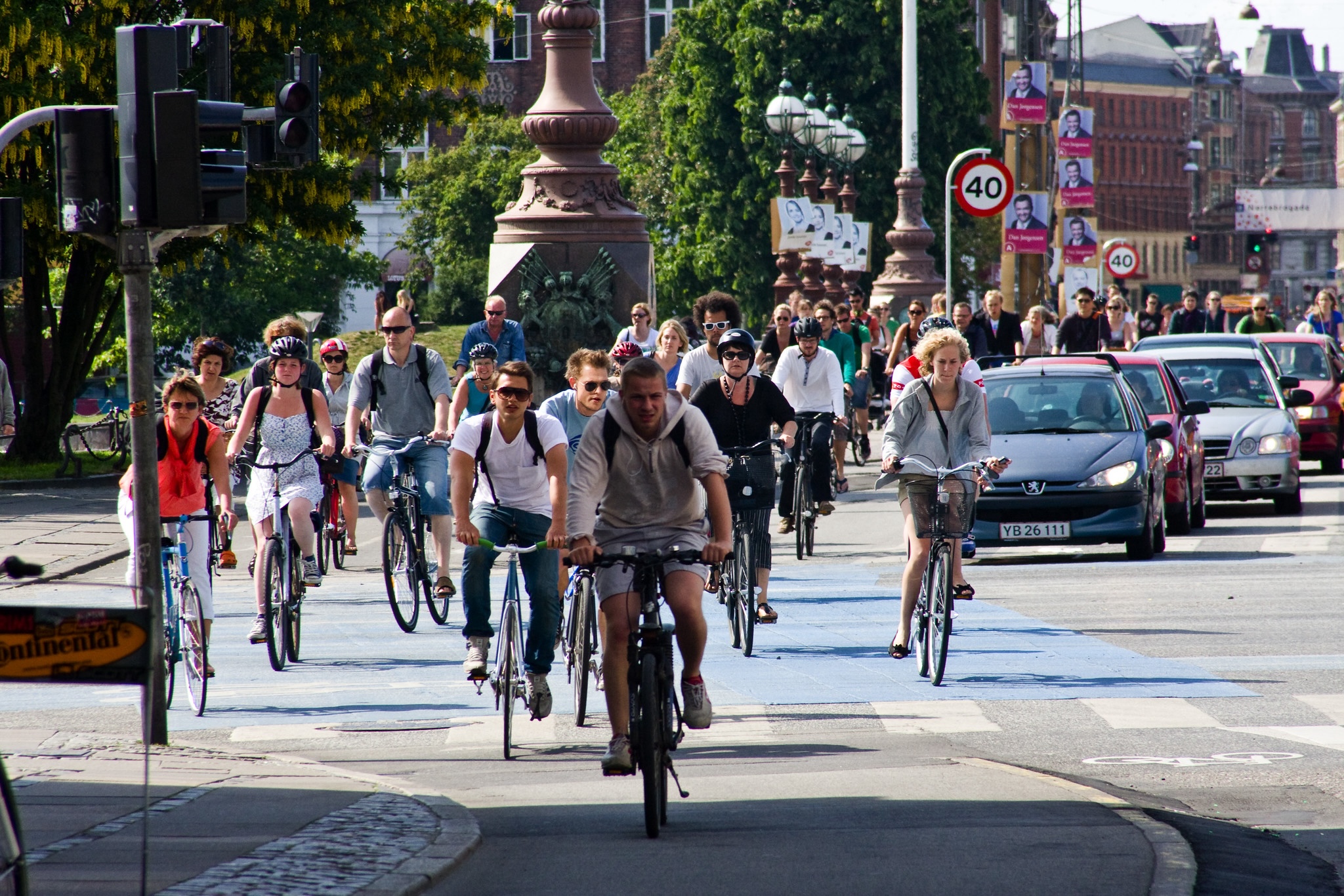
Banner image: Bicycle rush hour in Copenhagen, Denmark. Image by Mikael Colville-Andersen via Flickr (CC BY-NC-ND 2.0 ).