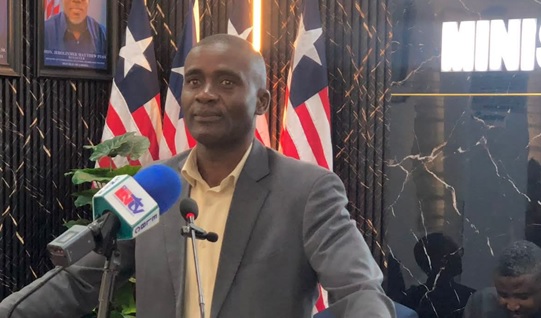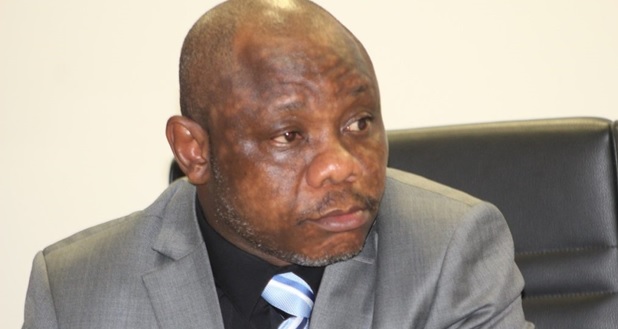
MONROVIA, LIBERIA – The public exchange between former Finance and Development Planning Minister Samuel D. Tweah and current Finance Minister Augustine Kpehe Ngafuan has exposed more than a policy disagreement. It has laid bare a troubling pattern of political distortion that continues to poison Liberia’s national discourse. What is at stake is not merely harmonization, but truth, institutional memory, and the credibility of those who once managed the country’s finances.
A day after Tweah publicly challenged Minister Ngafuan on claims of reversing salary harmonization, two former senior executives of the Liberia Anti-Corruption Commission stepped forward to confront what they described as outright falsehoods. Former LACC Vice Chair Kanio Gbala and former Executive Director Mohammed Fahnbulleh were unequivocal. Salaries at the LACC were harmonized under Tweah’s tenure, and they have been increased more recently. Gbala’s assertion was blunt and damaging to Tweah’s narrative. He stated plainly that harmonization did occur and that subsequent adjustments amounted to increases, not reversals.
This directly contradicts Tweah’s February 3, 2026 claim that the LACC and the General Auditing Commission were never harmonized. According to Tweah, these institutions already had a single pay system and therefore harmonization did not apply. That argument collapses under scrutiny. What harmonization actually did was impose a standardized pay grade and rule-based compensation system, ending discretionary and inequitable salary practices. That is harmonization in its purest form.
Integrity institutions like the LACC and GAC were not exempt from reform. While they were not subjected to the same administrative controls as other government entities, they were very much part of the national remuneration framework. To suggest otherwise is either a failure of recollection or a deliberate attempt to mislead the public. Neither explanation flatters a former finance minister.
More troubling is Tweah’s persistent conflation of reversing harmonization with increasing salaries. The two are not the same, and pretending otherwise is intellectually dishonest. Harmonization increased the salaries of approximately 15,000 government workers in its first year and about 45,000 over the following three years. University of Liberia instructors saw increases exceeding 60 percent. These are not speculative claims. They are documented outcomes.
Reversing harmonization would mean restoring the dual system of basic salary and general allowance that harmonization abolished. That system allowed widespread tax avoidance and entrenched inequity across government institutions. It is precisely what harmonization was designed to end. Increasing salaries within a harmonized framework reinforces the reform. It does not undo it.
The technical explanation makes this clear. Under the pre-harmonization system, a typical worker paid personal income tax on basic salary alone while allowances escaped full taxation. This resulted in artificially low tax obligations. Harmonization combined these income streams into a single taxable salary, increasing transparency and compliance. The so-called loss some workers experienced was not a pay cut. It was the consequence of paying proper taxes on total income.
To reverse harmonization in reality, the government would have to resurrect the dual pay system and reintroduce tax distortions. That is neither lawful nor practical. It would require dismantling the very framework that underpins current public sector compensation. Absent that reversal, the combined tax effect of harmonization remains permanent. No amount of political rhetoric can change this fact.
Even more revealing is what the argument avoids. Harmonization also ensured that members of the judiciary paid taxes on all components of their compensation. That reform cannot be undone without constitutional and legal chaos. Any serious policymaker understands this. Which raises the question. Why pretend otherwise?
The answer lies in politics. Harmonization was politicized in the heat of electoral competition. It was framed as punishment rather than reform. Now, having benefited from the very system they once attacked, some officials find themselves trapped by their own narratives. The result is a cycle of half-truths designed to manage perception rather than inform the public.
Minister Ngafuan’s remarks on Class Reloaded, including references to reversing harmonization at the LACC, GAC, and judiciary, only deepen the confusion. Salary increases are being implemented under the National Remuneration and Standardization Act. That Act mandates equity, standardization, and periodic increases. Following the law is not reversal. It is compliance.
The intervention by former LACC officials is therefore significant. It restores factual clarity to a debate clouded by political convenience. It also underscores a deeper problem in governance. When former and current officials speak loosely about complex reforms, the public pays the price in confusion and mistrust.
Liberia’s economic recovery cannot be built on rhetorical shortcuts. Harmonization was a difficult but necessary reform. It corrected deep inequities and strengthened fiscal discipline. Misrepresenting it for political gain undermines public understanding and weakens institutions.
At some point, honesty must replace posturing. The public deserves to hear what leaders already know. Harmonization was not reversed. It cannot be reversed. Salary increases today are the product of harmonization, not its burial. Pretending otherwise may score political points, but it erodes confidence in governance.
Keeping the national discourse honest is not optional. It is a duty. And those who once held the nation’s purse should know that better than anyone.