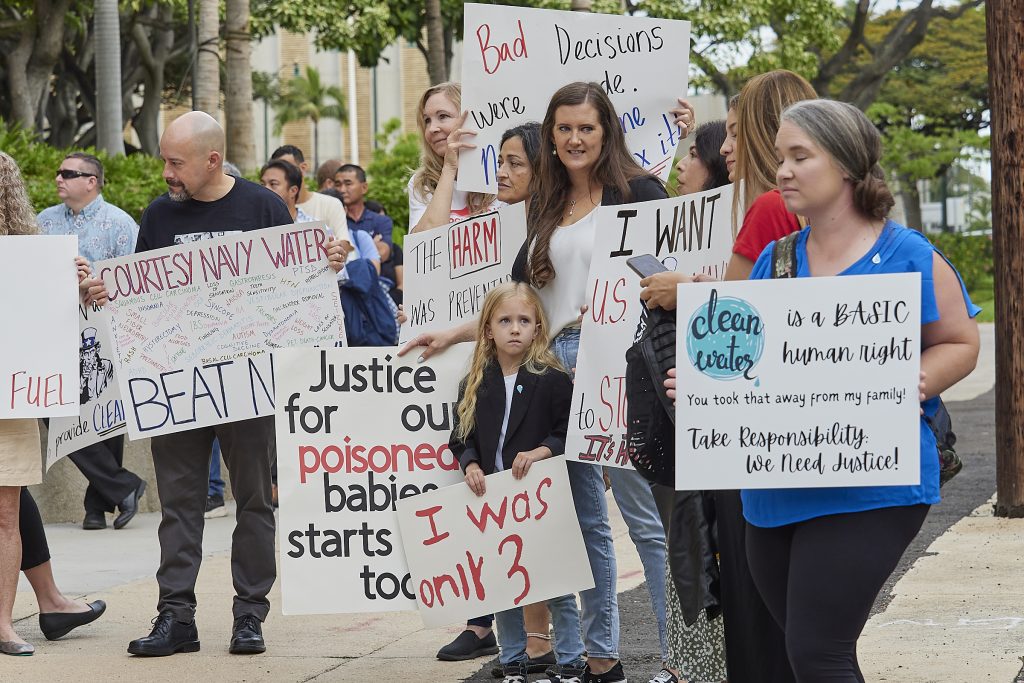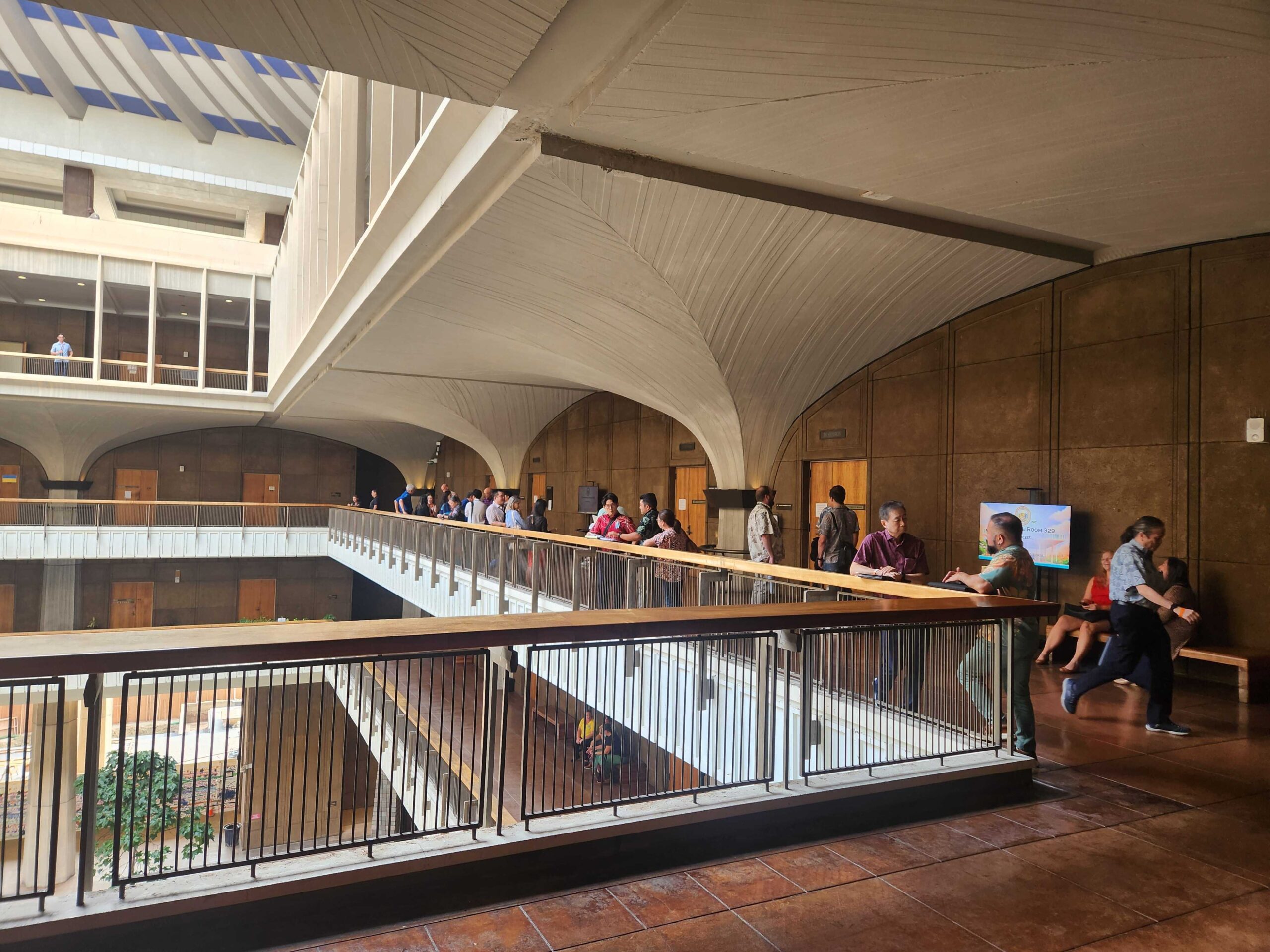
The potential bribe is a public issue that touches the public in different ways. A legislative inquiry would allow the public to watch how it unfolded.
The twists and turns of the mysterious alleged $35,000 bribe to a Hawaiʻi legislator just took some pretty surprising twists and a very sharp turn.
Right after I completed a draft of a column accusing officials of stalling and doing nothing, the opposite suddenly happened.
State and federal officials who were full of can’t-be-dones and wait-and-sees have decided to work together on a probe already started by Hawaiʻi’s federal prosecutor.
Good for them. Still, not good enough, though. Legal probes have important limits.
Civil Beat is focusing on transparency, accountability and ethics in government and other institutions. Help us by sending ideas and anecdotes to sunshine@civilbeat.org.
The probe needs help. The Legislature needs to offset these limits with its own investigation, which can be broader and more public. That’s not simply the noble thing to do. It’s obligatory.
There’s a difference between a legal investigation and a public investigation. The bribery situation is really both. The legal investigation’s limits have to do with the difference between a legal issue and a public issue.
Do people have a right to know? This means something different in everyday language than it does in legal language.
According to Hawaiʻi Attorney General Anne Lopez, “The January 16 decision by federal authorities to share evidence provided a clear path for the Attorney General to proceed without jeopardizing the ongoing federal investigation.”
Clear path? Not really because law doesn’t do clear path. Bumpy, winding and hidden, is more like it. That’s not the exception. It’s the rule. The law is supposed to work that way.
Two questions are the heart of the matter: Was there a bribe, and if so, who took it? Don’t expect the probe to answer these questions any time soon, possibly never, because the probers may decide they can’t answer those questions definitively.
Glitches and delays won’t disappear because law itself has glitch craft all its own, and for good essential reasons.
It’s called legal procedure, particularly due process. We tend to think about law as definitive, as a redeemer, liberator and protector. It can be all of those things and often is. It is also a deliberative process, slow, careful, and when it comes to investigations, private.
Following proper legal procedure means mum’s the word. The kind of probe Hawaiʻi’s attorney general and governor signed on to takes place privately, away from the public eye. We have no idea what, if anything, the federal prosecutor has done in the years since the incident happened. That’s not going to change.
As long as the bribery case is seen as a legal issue, the longer it’s going to take, and the less information will be given to the public.
But the bribe is also a public issue that touches the public in different ways and includes other political bodies that are closer to everyday life than a legal investigation is and have other ways of getting information.
“To preserve the integrity of the investigation the governor and attorney general will not comment further,” a press release announcing the probe said.
Gov. Josh Green and Attorney General Anne Lopez have decided a state investigation of the $35,000 potential bribe of a legislator is in order after all. (David Croxford/Civil Beat/2023)
OK, but the Legislature could never get away with that “no comment” and with good reason. If legislators did this, we would say,” People have the right to know! Do your job!”
The public has different expectations about the Legislature. And they should.
A legal probe legitimately may wall off the public. That’s unacceptable for a Legislature. One of the biggest complaints about the Legislature is its lack of transparency, you know, those mysterious, shuttered end-of-session meetings like they’re the College of Cardinals selecting a pope.
Different institution, different norms and different expectations from the public, and different constitutional obligations.
So, the Legislature should step in and do its own investigation in order to cover all the bases.
Many legislators seem reluctant and are dragging their feet. Get over it. It’s not an option. It’s a requirement for six good reasons.
First, investigations are an important part of a legislature’s duties. Sure, investigations don’t always go well. To call some congressional investigations a dog-and-pony show is an insult to both dogs and ponies.
State officials overall have had a lousy record dealing with corruption. They need to get off their okoles and get their reputation back.
And some of our state legislators have been known to grandstand a time or two.
But so what? Investigating, asking tough questions, holding people accountable publicly is as much a part of legislative duties as passing laws itself.
Second, the Legislature can get information that the legal investigators can’t get. Legislators can ask different sorts of questions. And they do have subpoena powers.
Third, unlike the legal probe, the legislative investigation is available for all to see. Transparency has vices and virtues. You might witness behavior that’s transparently stupid and venal or insightful and enlightening. That’s life in a democracy.
Fourth, a legislative investigation would show the public that legislators who over the past few sessions have danced around doing anything about serious ethical concerns are in fact interested in doing something about a big-time ethical violation. It would signal to the public that the Legislature is willing to police its own, which by the way is an obligation the Legislature already has.
Fifth, over the past years, state officials overall have had a lousy record dealing with corruption. They need to get off their okoles and get their reputation back.
The case of former Honolulu police chief Louis Kealoha, his wife and the rest of those HPD band of brigands was, as far as I’m concerned, the worst corruption case in Hawaiʻi’s history. It was investigated and tried entirely by the feds while the Honolulu Police Commission gave the chief an “it’s a pleasure to have Louis in my class” rating. Both then-Honolulu Mayor Kirk Caldwell and then-Honolulu Prosecutor Keith Kaneshiro were uncooperative, and the state’s own hear-no-evil, see-no-evil legal investigative apparatus sat on their keisters.
Sixth, the legal process is far from perfect. The Kealohas were investigated and tried only because Alexander Silvert, a public defender, was willing to tweak legal norms by convincing his normal adversary, a federal prosecutor, that the Kealohas had committed a crime. Silvert is also behind the petition to the Legislature that asks lawmakers to investigate the $35,000 payment.
A legal probe like the one the state has now signed on to could take a very long time. It means that the investigation, which may already have gone on for nearly five years, could go on a lot longer.
Was there bribery? If so, who? The public is as much in the dark about these key questions as it was when the issue first came to light.
There are a lot of sighs of relief as a result of the state and federal agreement for a joint investigation, especially on the part of state officials who felt more and more pressure to move forward but either couldn’t figure out what to do or didn’t want to get involved.
So they have wrapped themselves in the warm glow of the legal process. But don’t get too comfortable. The legal process is just a tool, not a Higher Power.
There is plenty of work to do all around. Whether the glow fades or not.
Sign up for our FREE morning newsletter and face each day more informed.
Sign Up
Sorry. That’s an invalid e-mail.
Thanks! We’ll send you a confirmation e-mail shortly.