The Traditional Games will be returning in April for its ninth year in Juneau. Registration opened Tuesday, with spots open for athletes young and old.
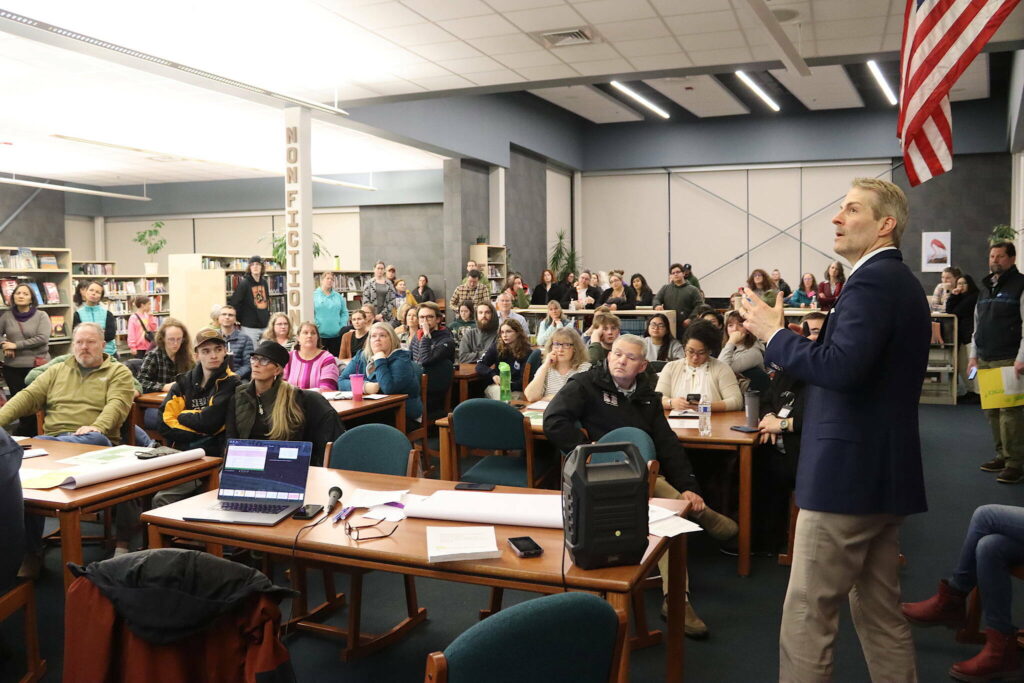
The three-day event, set for April 10-12 at Yaada.at Kalé, Juneau-Douglas High School, is hosted by the Sealaska Heritage Institute and the Central Council Tlingit & Haida Indian Tribes of Alaska. The event features games that stem from cultural heritage and survival skills.
Arctic sports athlete and coach Kyle Khaayák’w Worl, who organizes the Games, said space is available for 275 athletes.
The Traditional Games were originally created to give local athletes a chance to prepare for larger competitions, like the Native Youth Olympics in Anchorage. Over time, Worl said, the event has grown beyond that purpose.
“It’s really more about bringing the games to our own region, hosting our own large scale event,” Worl said. “It’s no longer just a local event. It’s grown into a statewide event.”
Athletes travel from across Alaska — as far north as Utqiaġvik — from across the border in Canada’s Yukon, and from the East Coast of the Lower 48.
This year, the Games will host athletes from Mexico and from New Zealand, who will teach Indigenous games from their regions at a workshop on Friday of the event.
“Our games have always been about creating community,” Worl said. “In traditional times, it was about bringing together our Northern villages. But now, we live in a global age, and I think there’s a lot that can be done in bridge-building, … bringing together people through sport and culture.”
Worl said he sees similarities among traditional games from different hemispheres. The word ‘game,’ he said, does not necessarily communicate their depth or purpose.
“These games incorporate survival and hunting skills, which go far beyond just a playful thing to pass time, but there’s real purpose in them, and that’s something I also notice in the other games that have been shared with us,” Worl said. “They run so deep in the culture, so deep in the people, that there’s a greater profoundness, spiritual connection.”
This year’s event will introduce another new feature: A college and career fair. Worl saw it as a great opportunity for more connection building, with college teams already traveling from near and far to attend.
While most of the current games come from Inuit traditions, Worl hopes to someday add more elements of Northwest Coast culture, like as canoe racing and canoe tug-of-war.
The games have grown steadily from year to year, but the opportunity to see new perspectives has remained.
Worl recalled one young athlete from Wainwright who traveled south for the Games last year, his first time leaving the Far North. He was struck by dense forest of the Southeast, and Juneau’s mountainside setting, so different from the flat tundra where he grew up.
“That perspective that we’re creating — an event people are traveling to, getting to see our community, learn about our community — that, for some of these youth, it’s profound. It’s life changing. It’s eye opening.”
Competition is open to all athletes ages 11 and up. Registration includes individual adult sign ups, as well as team registration for middle and high school athletes through a coach.
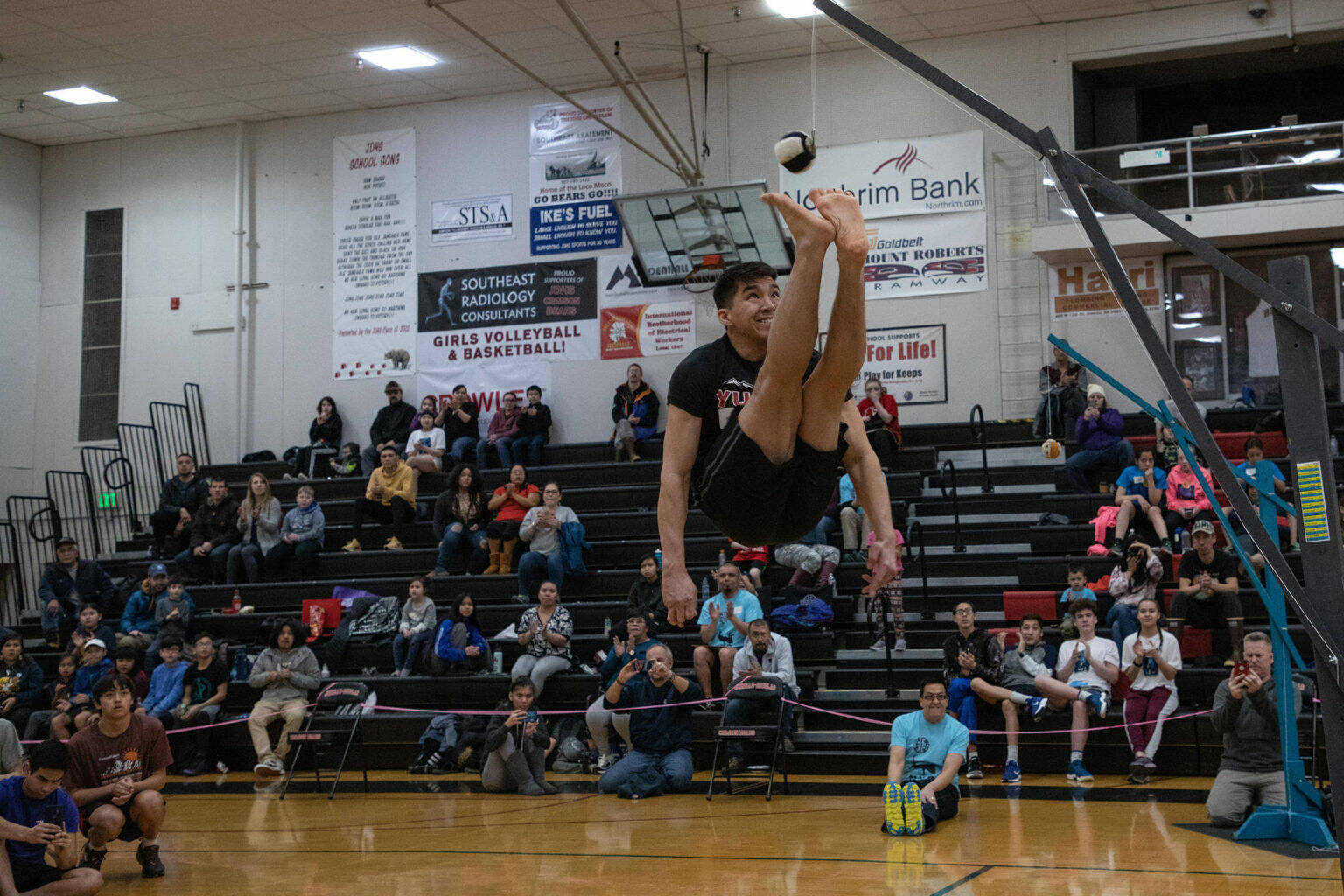
Quentin O’Domin attempts a 100-inch two-foot high kick during the Traditional Games on Sunday at Juneau-Douglas High School: Yadaa.at Kalé. (Mark Sabbatini / Juneau Empire file photo)
Joseph Rodgers, 12, a member of Chickaloon’s middle school team, attempts a two-foot high kick during the Traditional Games on Sunday at Juneau-Douglas High School: Yadaa.at Kalé. (Mark Sabbatini / Juneau Empire file photo)