Unrelenting aggression leaves deterrence as Tigray’s sole guarantee of survival
The observation widely attributed to Leon Trotsky, “You may not be interested in war, but war is interested in you,” captures a brutal and enduring truth. History repeatedly demonstrates that war cannot be stopped by the mere desire for peace.
When one party is determined to wage war, the peaceful appeals of the other are often interpreted as weakness and can embolden aggression. Peace, in such circumstances, must be actively defended.
Nowhere is this reality more immediate and devastating than in Tigray. The war has not really ended. Only the sounds of guns and drones have fallen silent. The conflict continues in slower, quieter, and equally lethal forms, fracturing society and robbing generations of dignity and security.
Nearly one-third of Tigray’s territory remains under occupation. More than two million people are displaced, trapped in temporary shelters without the conditions necessary for safe and voluntary return.
Abiy Ahmed’s recent actions—freezing EFFORT operations, halting supplementary budgets, restricting fuel supplies, and cutting the flow of essential goods to Tigray—constitute deliberate acts that signal both the continuation of war and preparations for yet another military assault against the people of Tigray.
In camps such as Hitsats, civilians are dying through deliberate, man-made starvation as aid is obstructed and mobility denied. This is siege warfare by other means.
Unilateral Peace
War begins long before the first shot is fired, through political, economic, social, and psychological warfare. Abiy’s government spent years systematically demonizing Tigrayans, portraying them as threats to national unity and enemies of the state.
This sustained propaganda was the opening salvo of war, a psychological battlefield designed to manufacture public consent for mass violence. Alongside this campaign of dehumanization came economic warfare: blocking funds, restricting fuel and goods, and imposing a siege to strangle Tigray.
These measures laid the groundwork for the genocidal assault that would follow and continue to this day in quieter forms.
Against this backdrop, Tigray’s repeated commitment to peace is undeniable. Before the outbreak of war in November 2020, Tigrayan leaders, elders, and political figures consistently called for dialogue and constitutional solutions.
Yet these appeals failed. Peace cannot restrain an adversary that has already chosen war. When a government pursues domination driven by ideological ambition and exclusionary nationalism, dialogue becomes irrelevant. Peaceful intentions are powerless against genocidal intent.
This is one of the most dangerous myths in politics: the belief that peace can be achieved simply because one side desires it. History offers harsh lessons.
Britain and France hoped concession would contain Hitler. It only confirmed his belief that no one would stop him. In Rwanda, appeals for reconciliation could not stop actors committed to extermination. In Bosnia, negotiations failed to halt ethnic cleansing.
Peace requires at least two willing parties. When one seeks conquest, unilateral peace becomes vulnerability.
Fragmented Front
War is a calculated gamble. Aggressors assess risks, and perceived weaknesses before acting. This is why deterrence and preparedness are indispensable. When a people demonstrate unity, and the capacity to impose costs, they alter an adversary’s calculus.
Nations that survived existential threats—Finland in 1939, Switzerland during World War II, or South Korea after the Korean War—did so through resilience, alliances, and credible deterrence.
Today, Tigray’s ability to build such deterrence is gravely undermined by internal fragmentation. Following the Pretoria Agreement, Tigray remains mired in a multifaceted crisis, a true life-and-death flashpoint.
One of its most damaging manifestations is the split within the TPLF leadership. This rupture has eroded political cohesion, and emboldened adversaries. The damage goes beyond party politics, directly undermining the safety, unity, and survival of the people.
Compounding these crises are Tigrayan opposition groups that devote most of their energy to dismantling the TPLF, while offering no coherent alternative vision or policy programme. By portraying the removal of a single political force as a panacea, they substitute critique for strategy.
Their relevance appears to rest not on what they can deliver to the people, but on how effectively they can dismantle an existing political legacy. This zero-sum, scarcity-driven approach weakens collective resilience and serves as a strategic gift to those waging the ongoing silent war against Tigray.
The consequences are tangible. The occupation persists. Hundreds of thousands of displaced Tigrayans remain in makeshift camps because core issues—the removal of unlawful settlers, and security guarantees—remain unresolved.
Political fragmentation has made it easier for adversaries to dictate outcomes while Tigray debates itself into paralysis.
Existential Choices
What Tigray needs now is strategic clarity. Unity is existential. The immediate priority must be a political truce among Tigrayans, a minimally unified strategic framework focused on survival: ending the siege, restoring territory, enabling the dignified return of displaced people, and rebuilding deterrence. Political futures and ideological debates can follow survival.
This also requires constructive politics. Political parties must be judged on their own policies, and capacity to lead, not merely on their ability to denounce rivals. Initiatives that strengthen Tigray’s strategic position—such as fostering people-to-people relationships, including “tsimdo” with Eritrea—should be evaluated on their merits and potential to reduce long-term hostility, not rejected reflexively for partisan reasons.
For the international community, the lesson is equally clear: a ceasefire is not peace. Diplomacy that celebrates agreements without enforcing their core provisions merely freezes injustice. Hence it must press for the full implementation of the Pretoria Agreement by both parties.
That means insisting on concrete outcomes, including the withdrawal of non-ENDF forces from constitutionally recognized territories of Tigray, unhindered humanitarian access, accountability, and the creation of conditions that allow displaced people to return safely and voluntarily.
Central to this process is genuine political dialogue between the federal government and the TPLF, without which the agreement remains hollow.
Tigray’s experience exposes a universal truth. Calling for peace without deterrence does not prevent war. Preparation is the means by which survival is secured.
An enemy committed to domination will not consent to peace. It has to be defended, through unity and readiness, by making aggression costly.
The guns in Tigray may be mostly silent, but the war continues. What exists now is a pause shaped by exhaustion and imbalance. Until the causes of the war are addressed and the terms of peace enforced, silence will keep being mistaken for resolution, and suffering will continue in its shadow.
Query or correction? Email us
While this commentary contains the author’s opinions, Ethiopia Insight will correct factual errors.
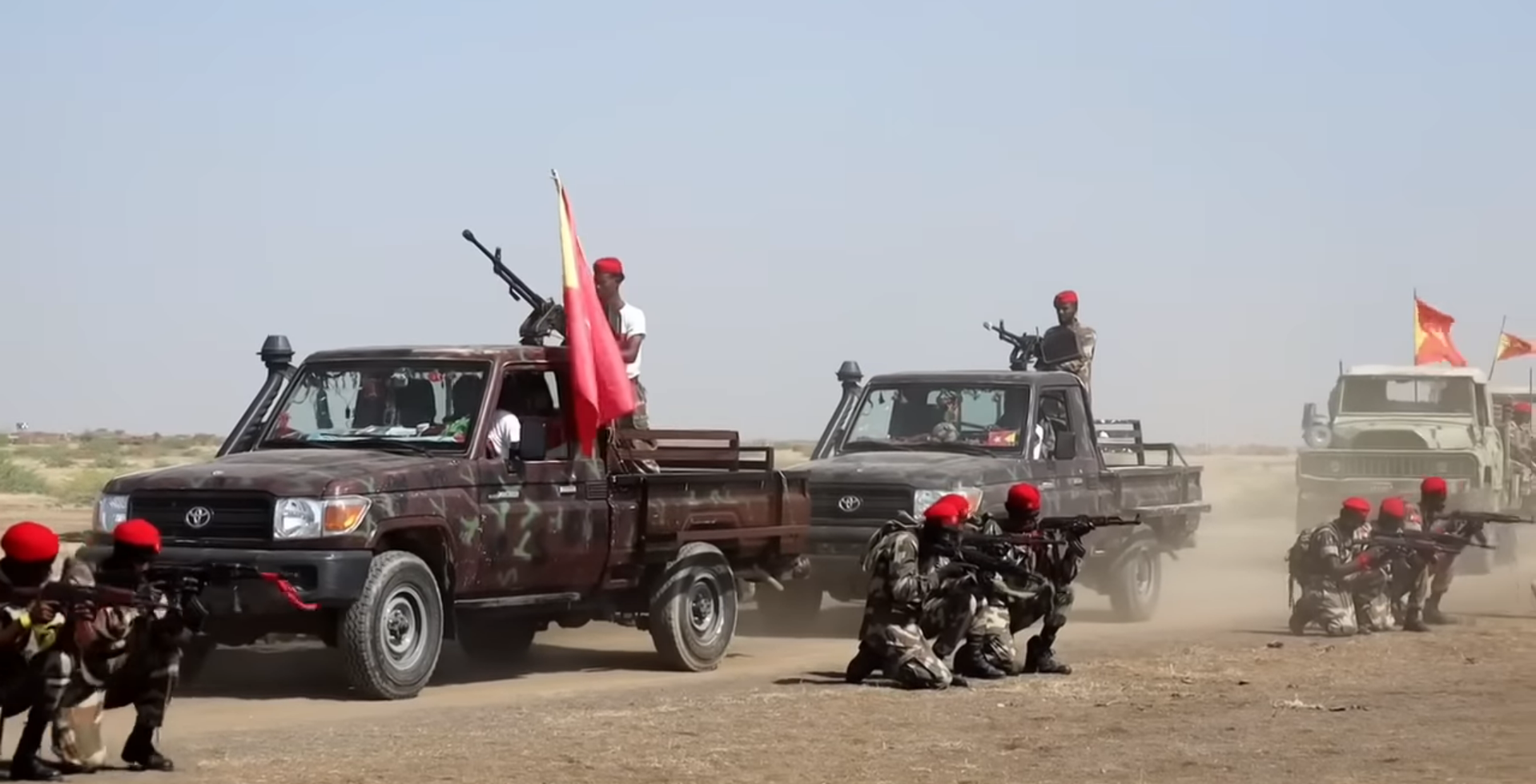
Main photo: Fighters from Army 70, part of the Tigray Forces, take part in military exercises in border areas with Sudan. October 2025. Source: social media.
Published under Creative Commons Attribution-NonCommercial 4.0 International licence. You may not use the material for commercial purposes.