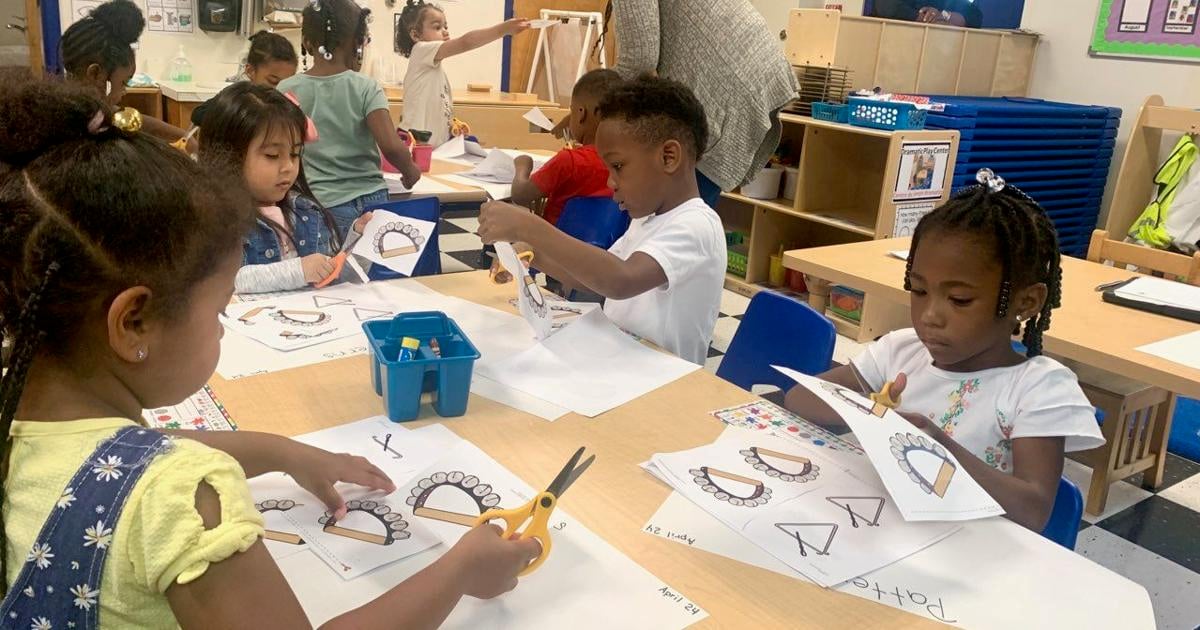
Gov. Henry McMaster’s final budget proposal contains a lot of predictable requests — from tax cuts and road funding to raises for teachers and law enforcement officers — and one surprise: free breakfast for all kids in public schools. Some are good ideas, others not. But far and away his best and most important idea is expanding 4-year-old kindergarten, which he correctly calls “the key to the future.”
Mr. McMaster said 4K “may turn out to be the most important investment we’ve made in early childhood education.” That’s true, but it fails to capture the significance of the program. Early childhood education is our most important investment in education, which makes 4K our most important investment, full stop.
The research is as clear as it is self-evident: Kids who are ready to start school — who know their ABCs and their colors and can count and understand when to use their indoor voices and not to hit people and who respect adults — learn more once they start; most of their peers without those skills never catch up, and the rest of us spend the rest of their lives supporting them, whether that’s through social programs or prison.
Most middle- and upper-income students start school with those skills, but too many poor kids don’t, because their parents either can’t, won’t or simply don’t know how to teach them; 4-year-old kindergarten helps them catch up.
Currently, our state pays for kids whose families earn as much as 185 percent of the federal poverty level to attend 4K in a public school or a private child-care center that abides by modest state requirements. On Monday, the governor proposed raising that to 300 percent of poverty, or about $96,000 for a family of four. That would cost about $10 million and potentially raise enrollment from 18,000 to 20,000.
That still would be only half of the state’s eligible 4-year-olds, but it would be an improvement — and an improvement that could grow by investing just a bit more, to make 4K available to all 4-year-olds. That would pick up a few higher-income children who really need the program and, more importantly, remove the social stigma of 4K as a poverty program, which turns off some eligible parents.
Mr. McMaster told reporters we need to eventually make the program universal, but his proposal would simply add enough students to fill the 2,000 4K seats that are available but currently unused in private centers.
It’s an understandable approach: You don’t want to tell more parents they can send their kids to 4K when there’s no capacity for them. But there won’t be another 10,000 slots available as long as there aren’t kids ready to attend, so we need to go ahead and increase eligibility. One approach — the one the Legislature is using with private-school vouchers — would be to pass a law that expands eligibility every year: 300 percent next year, 400 percent the year after, 500 percent after that and then no cap.
If you’re worried about the cost, don’t: 4K costs a tiny fraction of the cost of those vouchers, and unlike the vouchers — whose record is mixed on improving student learning — we have decades of evidence that 4K and other early childhood education efforts make real and lasting improvements in learning.
Click here for more opinion content from The Post and Courier.