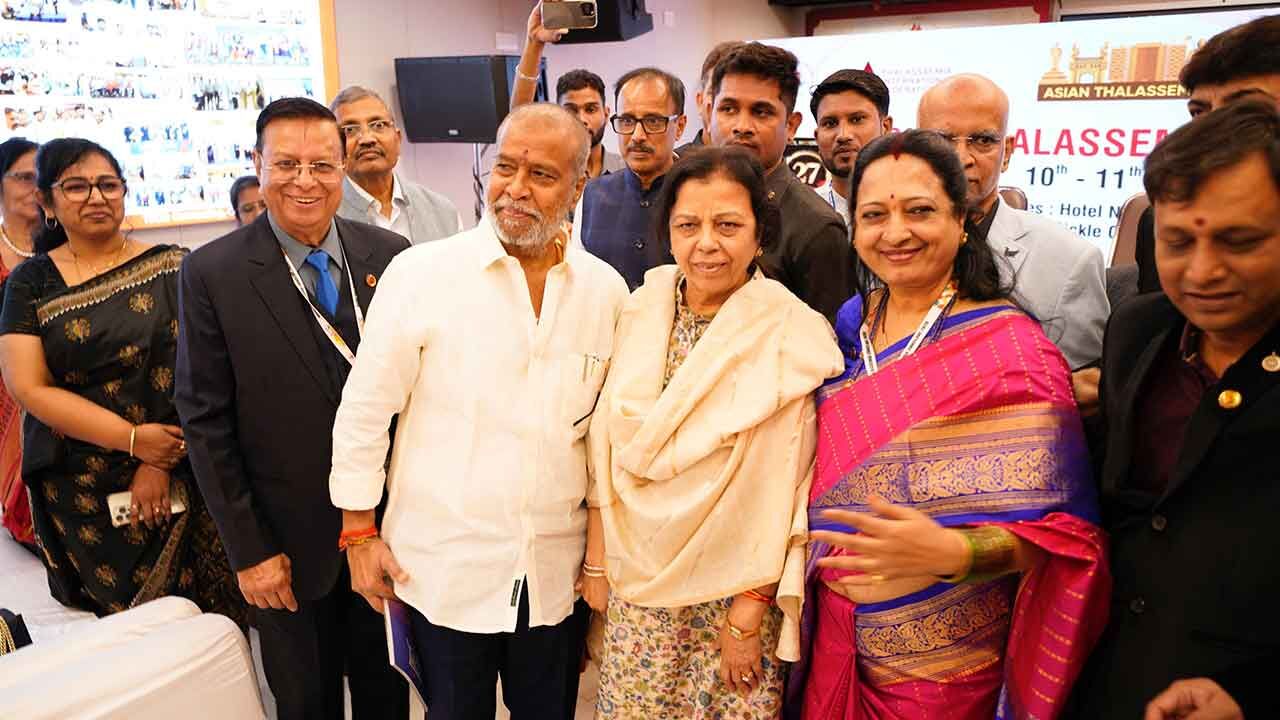
The Asian Thalassemia Conclave (ATC) 2026, organised by the Thalassemia and Sickle Cell Society (TSCS), Hyderabad, in collaboration with Kamala Hospital Research Center, concluded successfully with over 400 delegates from across India and around the world participating in the two-day deliberations. The conclave brought together leading clinicians, public health experts, policymakers, researchers, non-governmental organisations and patient advocates to strengthen a coordinated response to thalassemia, one of the most serious yet preventable genetic blood disorders.
Hon’ble Minister for Health, Medical and Family Welfare, Government of Telangana, Shri Damodar Raja Narasimha, visited the conclave and interacted with organisers and delegates. During his visit, the Minister reiterated the government’s commitment to strengthening thalassemia prevention and patient welfare in the state. He announced that the government is moving towards introducing genetic and antenatal screening for thalassemia, expanding access to disability certificates for patients and providing financial assistance and pensions for affected children. He also emphasised plans to strengthen blood bank infrastructure across all districts to ensure the availability of safe and adequate blood for patients requiring regular transfusions.
The conclave witnessed a grand inauguration ceremony, where Uday Kumar, IAS, Chief Executive Officer, Arogya Sri, attended as the Guest of Honour. Other eminent dignitaries present included J S Arora, Shobha Tuli, Vinita Srivastava, Dr Pietro Sodani, Dr Antonio Piga, Vinod K. Agarwal, IAS (Retd.), and Sharat Kumar, IAS (Retd.). The dignitaries expressed deep concern over the rapid rise in thalassemia cases globally and underscored the urgent need for decisive and collective action to arrest and ultimately eradicate thalassemia in India, Asia and the world.
Speakers shared insights from their respective fields, highlighting how prevention-first strategies, such as systematic screening, genetic counselling and strong public health integration are essential to reducing preventable thalassemia births. The discussions reinforced the limitations of a treatment-only approach and the necessity of taking bold, coordinated steps at policy, community and healthcare system levels.
Dr Chandrakant Agrawal, President, Thalassemia and Sickle Cell Society (TSCS), said, “The Asian Thalassemia Conclave 2026 marks a significant step towards shifting India’s response from lifelong treatment to prevention-led public health action. Thalassemia is one of the few genetic disorders where the majority of cases can be prevented through timely screening, counselling and informed choices. The overwhelming participation at this conclave, including experts from across the world, reinforces the urgent need for unified national and regional strategies if we are to achieve our shared goal of a thalassemia-free India by 2035.
A key highlight of the conclave was the launch of the Bharatiya Federation of Thalassemia Societies (BFTS), a national platform aimed at unifying thalassemia organisations across the country to strengthen advocacy, standardise best practices and amplify the prevention agenda. The inauguration also saw the formal unveiling of the Bharatiya Federation of Thalassemia Societies (BFTS) logo. In a symbolic moment, two young twins stepped onto the stage to unveil the logo, reinforcing the message that efforts to address thalassemia must prioritise the well-being of future generations.
The Asian Thalassemia Conclave has been conceptualised against the backdrop of TSCS’s over 27 years of work in patient care, prevention and advocacy. TSCS currently provides comprehensive, free-of-cost treatment and long-term support to more than 4,588 patients, many of whom depend on the organisation for regular blood transfusions and specialised care. One of its most cited public health successes has been in Mahabubnagar district of Telangana, which became the first district in India to achieve 100 per cent prenatal screening of pregnant women for thalassemia, demonstrating the impact of systematic screening and counselling.
India continues to bear one of the highest thalassemia burdens globally, with nearly 15,000 children born every year with thalassemia major. Experts at the conclave reiterated that most of these births are preventable through early screening, timely counselling and informed reproductive choices. However, uneven implementation, limited awareness and gaps in access to genetic counselling remain key challenges.
Deliberations at ATC 2026 focused on prevention-led strategies, including premarital and antenatal screening, integration of thalassemia screening into maternal and child health programmes, strengthening genetic counselling services, and ensuring a safe and reliable blood supply through voluntary donation systems. Sessions also addressed disparities in access to treatment and long-term care, particularly in rural and underserved regions.