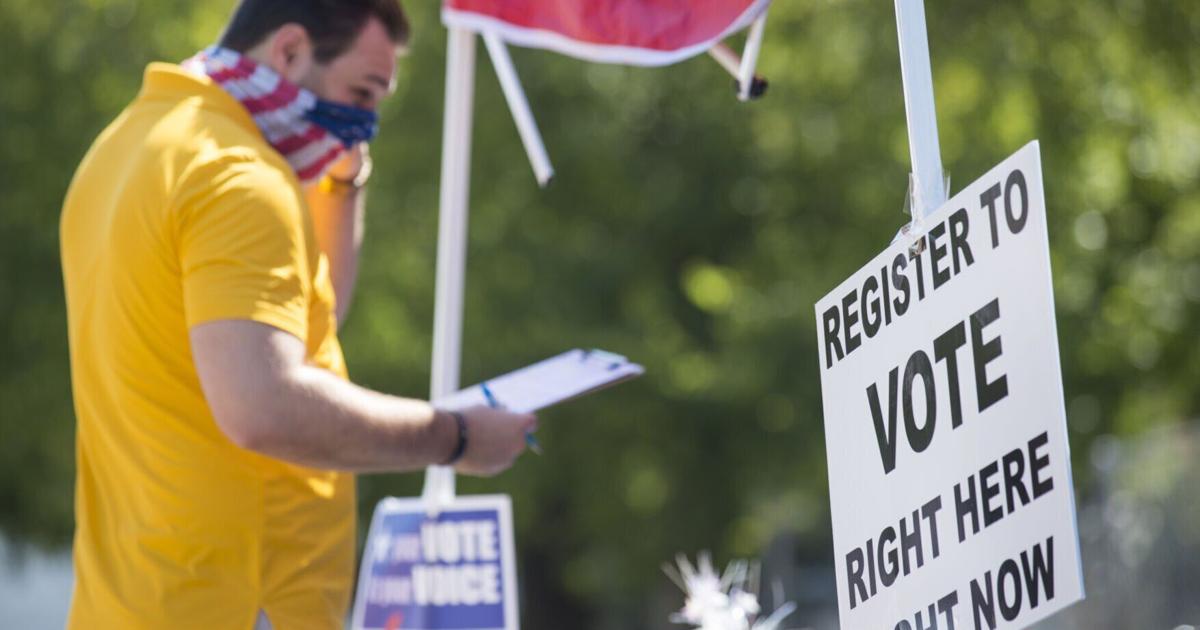
Louisiana is turning over detailed voter registration data to the U.S. Department of Justice, including voters’ full names, birthdays, home addresses, driver’s license numbers and the last four digits of Social Security numbers.
Dozens of other states have resisted requests from the Justice Department to share that information and are now facing federal lawsuits for refusing to do so.
Secretary of State Nancy Landry said Monday during a talk with the Baton Rouge Press Club that lawyers from her office reviewed the DOJ’s request and decided the law required Louisiana to comply.
“We, after a careful analysis, decided that we had to comply with it,” she said. “We’re working with their IT folks to get it in the right format to share that with them.”
Harmeet Dhillon, assistant Attorney General for the Justice Department’s civil rights division, which enforces federal voting-rights laws, sent Landry a letter in early September requesting a copy of Louisiana’s statewide voter registration list.
The voter data has to include each registrant’s full name, date of birth, residential address, and driver’s license number or the last four digits of a social security number, the letter says.
The secretary of state’s office in late September responded with voter registration data that is already available to the public to purchase. That list included voters’ full names, home and mailing addresses and phone numbers as well as age, race, sex and party affiliation — but not any part of Social Security numbers or drivers’ license numbers.
Landry said Monday that Justice Department officials weren’t satisfied with the voter list containing publicly available information.
The secretary of state’s office is preparing to comply with the request “in short order,” a spokesperson for Landry said Monday.
Dhillon in her September letter said the Justice Department needs the voter data to determine if Louisiana is complying with federal requirements for proper maintenance of voter registration lists.
She cited three federal laws as grounds for collecting Louisiana voters’ personal information: the Civil Rights Act of 1960, the National Voter Registration Act of 1993 and the Help America Vote Act of 2002.
DOJ campaign for voter data
Over the last several months, the Justice Department has been trying to collect detailed voter information from dozens of states across the country, with varied success.
Louisiana, along with Mississippi and Tennessee have agreed to “voluntarily provide their full registration lists,” according to a December news release from the Justice Department.
But dozens of other states and jurisdictions have pushed back on the request for detailed voter data, prompting the DOJ to file at least 22 lawsuits, according to that news release.
After the Justice Department sued Colorado last month, Secretary of State Jena Griswold, a Democrat, said, “We will not hand over Coloradans’ sensitive voting information to Donald Trump. He does not have a legal right to the information.”
The federal law enforcement agency sued Georgia after that state provided only some voter data, though not all.
“Hardworking Georgians can rest easy knowing this data was shared strictly in accordance with state law that protect voters’ privacy,” Georgia Secretary of State Brad Raffensperger, a Republican, said in a statement.
In lawsuits, the Justice Department has argued that the Civil Rights Act of 1960 gives the U.S. attorney “sweeping power” to request and review states’ voting registration records.
Some states are arguing providing sensitive voter data to the Justice Department violates privacy laws.
“The central issue in the Justice Department’s demands and lawsuits is what, if any, information federal voting laws require states to disclose to the federal government despite state laws designed to protect voters’ sensitive personal information,” explains a recent paper by Derek Clinger, senior Counsel at the State Democracy Research Initiative at the University of Wisconsin Law School.
Based on existing court precedent, there is not a clear answer to this question, Clinger wrote.
The Associated Press Contributed to this report.