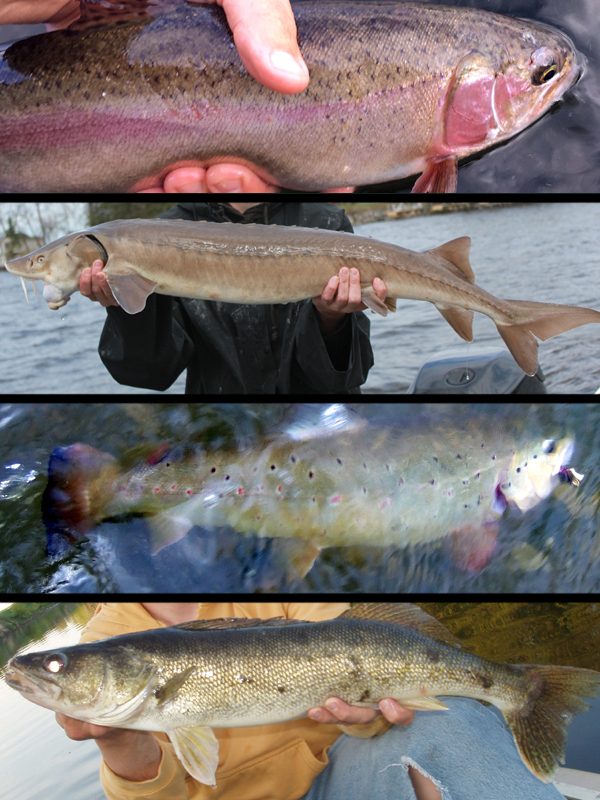
By Nick Simonson This time of year, I often take an hour or so on a particularly cold night to look over my life list of fish
caught and update it with any new species landed over the past 365 days or those that may have broken the personal records I had set in past years. Like setting weight loss goals, or marks for mileage I may want to break in my exercise efforts in the coming year, life listing gives me an idea of where I’m at. Where I might go in the four seasons to come is only bounded by where my imagination might take me in my fishing adventures. While the basics of life listing can be as simple as creating a list of species landed, adding in the information around each one and the biggest, along with a few notes about how it was caught, can make the process part of an effective way of planning future adventures for even bigger and better fish and a longer life list.
Certainly, the species serves as a starting point for any life list, and in fact it’s a good way to get going on such a project at the start of any angling year. Make a list of every species you have caught to kick things off. Whether it’s on a hand-written ledger or a spreadsheet, that first column helps set the scene for where your fishing adventures have been. From there, however, you can go into even greater detail. Length and weight, if known, are fun statistics to keep track of from year-to-year and help set new goals in coming seasons and are the next most important elements in any life list if not for planning, then perhaps just for bragging.
Additional categories help further flesh out the database of information surrounding the number of fish caught and the biggest ones landed. If the dates are known, record those, even getting down to the time of day to provide additional detail. Digital images can help with exact dates and times, as the information is often stored in the data of the photograph stored on a phone or a camera. Where the fish was landed is another crucial element that helps pinpoint activity and provides a starting point for the next biggest fish you plan to catch. It can be as basic as the lake or river that was fished, or as detailed as a particular bay or a GPS location where the fish was hooked. Again, this information is often stored in a digital photo’s metadata if you’re looking to get granular in your life list’s columns.
From there, tertiary items such as lure or bait used; presentation type such as trolling, jigging, fly rod, or ice fishing; weather conditions; moon phase and so on are options to help really add some detail to a life list. Even jotting a quick 150-character summary of the catch in a final spreadsheet cell is a fun way to reference the event, make note of who was with you, and add more about the story behind the data.
Some of the catches may be a result of applied effort, while others might be accidental. Either way, both provide insight into where to try for your next biggest fish of that type and the additional information helps provide added clues when you apply your efforts to besting the stats you’ve jotted down along side the species.
Life listing can be as simple or as complex as you want it to be, much like fishing and the many options we as anglers have to pursue our favorite species. The depths of winter and the start of a new year provide ample opportunities to take stock of the species caught, along with all the other information that makes fishing fun. Consider updating your life list, or if you haven’t made one already, putting it all together to set plans for what you wish to catch and assess options for besting the biggest ones already on your list in the 12 months to come.
Simonson is the lead writer and editor of Dakota Edge Outdoors.