The events did not end there. The prosecutor’s office opened an investigation. Five employees of the magazine were detained, regardless of their involvement with the cartoon, on charges of “publicly insulting religious values” for allegedly depicting figures of the Prophet Muhammad and the Prophet Moses.
They were forced to lie on the ground, handcuffed behind their backs during their arrest. The cartoonist, Dogan Pehlevan, was charged with “inciting hatred and hostility or insulting the public” and with “insulting the president”. The magazine’s managing editor, Zafer Aknar, the graphic designer, Cebrail Okcu, manager Ali Yavuz, owner and editor-in-chief Tuncay Akgun, and the managing editor, Aslan Ozdemir were all charged with “inciting hatred and hostility or insulting the public”.
Five employees were arrested; the editor-in-chief could not be, however, as he was abroad. Meanwhile, prison sentences ranging from four-and-a-half to seven-and-a-half years were requested for all six.
The prosecutor’s office also ordered the confiscation of the magazine’s final issue containing the cartoon, and the magazine ceased publication. Access to its website was blocked from July 1.
The distribution company, which held a monopoly in this field in Turkey, unilaterally terminated its contract. The printing house also unilaterally cancelled its contract. The magazine could no longer be printed or distributed. It has not been published since then.
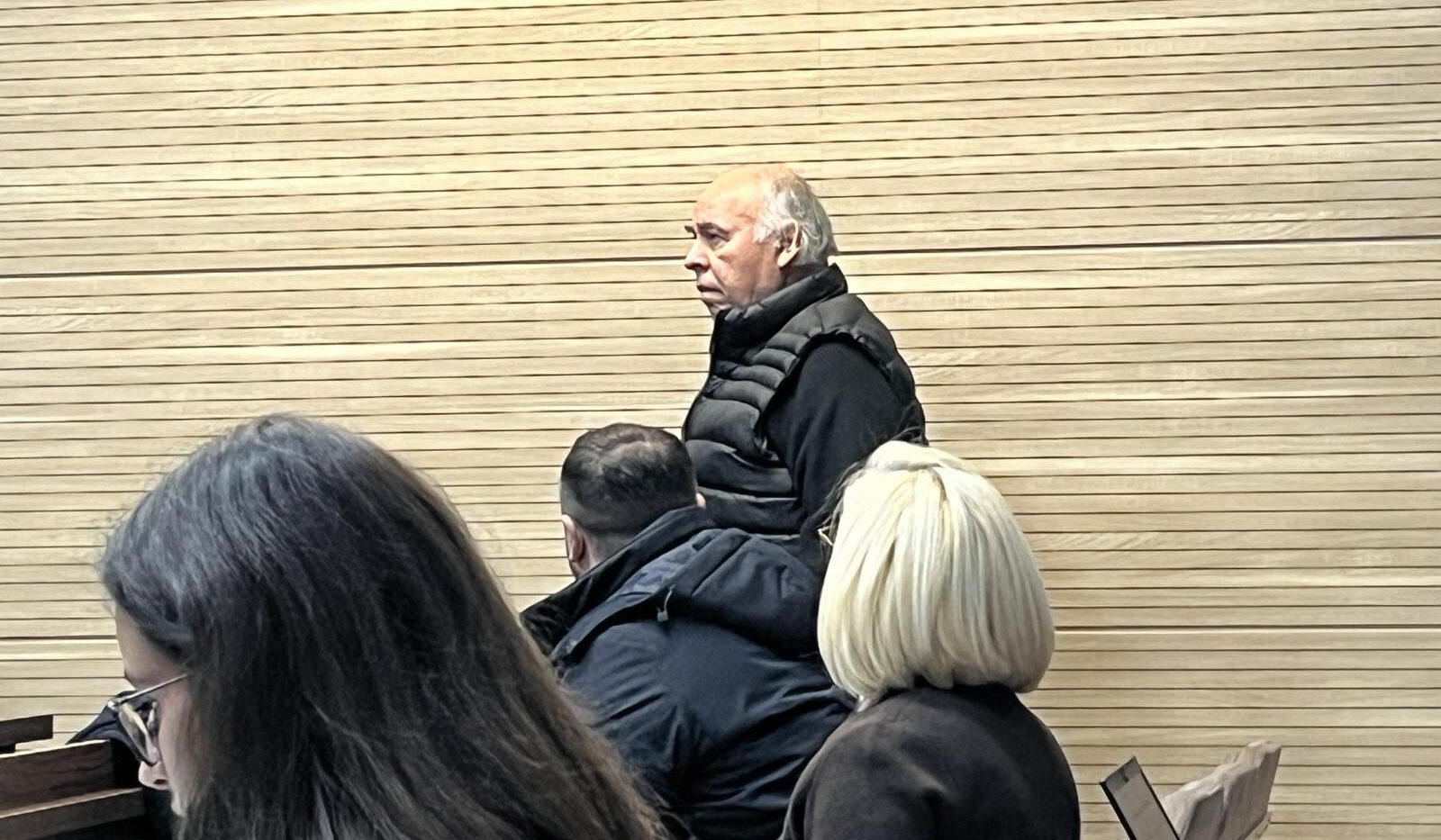
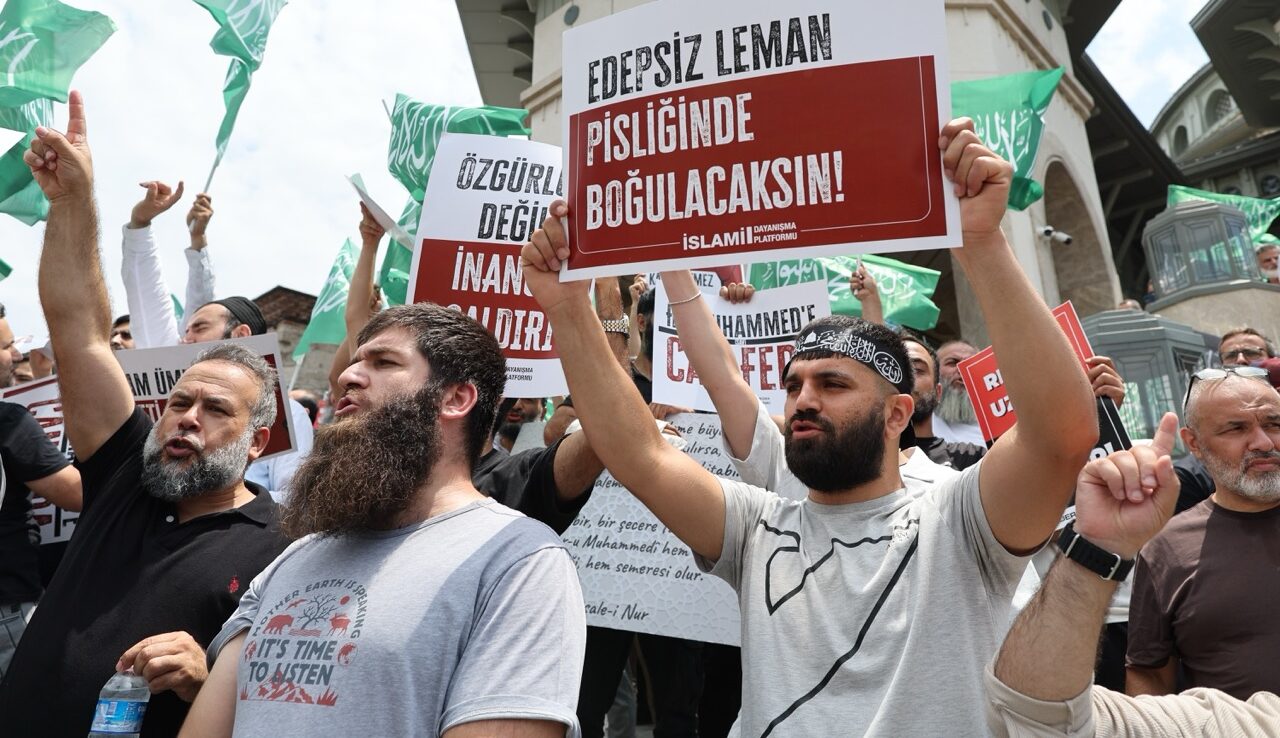
Meanwhile, on the night of the demonstration, a psychologist, Asli Aydemir, publicly confronted the people who were chanting slogans in front of Leman magazine’s office. She was immediately arrested on charges of “resisting arrest”. Five months later, she remains in custody. An indictment has been raised and her trial is set for February 2026.
Months later, access to Leman magazine’s website at leman.com.tr is still blocked. Its Instagram account was also shut down under a different pretext; only its X account with around 600,000 followers remains accessible, but the cartoonists, under threat of arrest and imprisonment, are not drawing or publishing any more cartoons.
Leman’s editor-in-chief, who has been a fugitive abroad for months, cannot return home. His trial is scheduled for May 2026, but even if the case is dropped, he does not believe Leman will be able to reappear.
In short, a relaunch seems impossible. Even if the cartoonists start drawing, there is no company to print and distribute the magazine. A magazine founded back in 1985 by a few cartoonists has become a thing of the past, after 40 years.
Leman’s most important feature, unlike all other magazines, was that it belonged solely to the artists and wasn’t backed by a large company. They never accepted advertising and their principle was to survive solely on sales. Leman emerged, survived and achieved success under these principles.
Over 40 years, Leman also transformed into a cultural club; 18 cafes were opened under the same name, serving as cultural centres for young people. The number eventually rose to 30. However, owing to the pandemic, the number of cafes fell and following recent events, due to fear and threats, they have closed one by one and will become a part of history, too.
I spoke with one of the pioneer founders of the magazine, on condition that his name would not be mentioned. He recalled that Leman was born from within Girgir magazine, which came before it and sold hundreds of thousands of copies, causing queues in front of newsstands.
“Turkey is a special country when it comes to humour and caricature,” he said. “For example, the anecdotes of Nasrettin Hoca [a legendary witty medieval Sufi figure] are unique to Turkey. The Karagoz and Hacivat play is also unique to Turkey; both are oppositional and criticise the powerful. Nasrettin Hoca does this with his anecdotes, while Karagoz and Hacivat, a shadow play, does it with words through two figures behind the curtain. That is why caricature magazines were very successful in Turkey.”
Those people I spoke to are now on trial. They are afraid and have been receiving threats. Even today, on X, some extremists say that the Leman staff have not been punished as they should be. The Charlie Hebdo massacre in Paris in 2015, when 12 staff members were killed by Islamists, is cited as an example. Their families are also under threat. They want the case to be concluded as soon as possible so they can become invisible in society, escape the threats, and return to their lives in safety.
Art, political humour and caricature, by their very nature, always disturb certain circles. In Turkey, the decline in democracy and freedom of expression in the last quarter-century has also dried up the environment in which caricature flourished. Both the number of magazines and readers have fallen, and successive lawsuits have frightened cartoonists.