
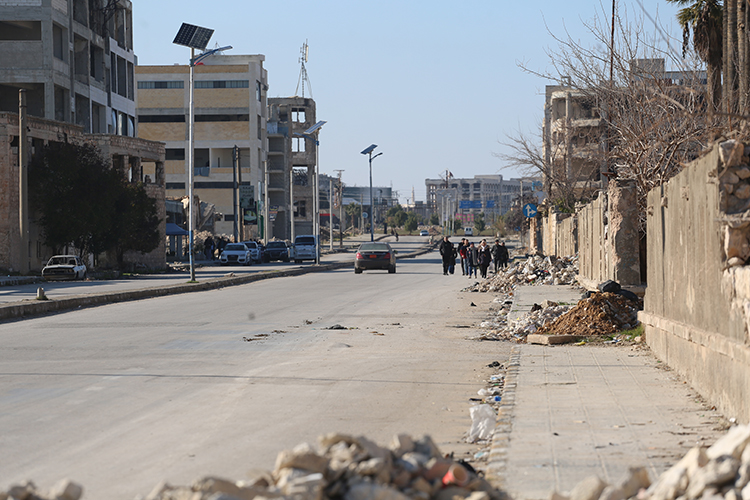
A fragile ceasefire took effect Tuesday morning in Aleppo after hours of heavy overnight clashes between Syrian government forces and the Kurdish-led Syrian Democratic Forces (SDF). Fighting in the Ashrafiya and Sheikh Maqsoud neighborhoods left civilians dead and wounded, struck medical facilities, and raised fears of a broader escalation in Syria’s north.
The Syrian Defense Ministry said its forces halted fire after “neutralizing” SDF positions and narrowing the engagement zone away from residential areas. Officials insisted the army acted defensively in response to attacks on civilian homes and military posts.
The SDF, however, denied shelling neighborhoods and accused pro-government factions of sparking the confrontation. In a statement carried by media outlets close to the group, the SDF said it ordered its fighters to stop “responding to attacks by Damascus government factions” as part of ongoing de-escalation talks.
Civilian Toll
The Interior Ministry reported that “random shelling” by the SDF killed a child and his mother and wounded 15 others, mostly women and children. Civil Defense teams also confirmed casualties in the Al-Jamiliya neighborhood. Al-Razi Hospital was reportedly hit as wounded were being brought in, though the SDF rejected claims it targeted medical facilities.
Aleppo’s governor, Ahmad Zarib, announced a suspension of work in schools, universities, and government offices on Tuesday. Security forces imposed a cordon around the affected districts to allow evacuations and prevent further civilian exposure to sniper fire and shelling.
Political Context
The clashes come at a sensitive moment in relations between Damascus and the SDF. They coincide with the looming deadline for the March 10 agreement, a deal brokered between Syrian President Ahmed al-Shara and SDF commander Mazlum Abdi. The agreement envisioned integrating the SDF into Syrian state institutions, but progress has stalled.
Suzdar Haji, commander of the Women’s Protection Units (YPJ), said in a recent interview that implementation remains “distant,” citing Damascus’s insistence on dissolving the SDF’s current structure and absorbing fighters individually into a new Syrian army. The SDF has resisted, viewing the proposal as an attempt to dismantle its autonomy.
Regional Pressures
Turkey has added pressure to the talks. Foreign Minister Hakan Fidan, speaking in Damascus on Monday, said the SDF must fulfill the merger agreement. Defense Minister Yaşar Güler warned over the weekend that Ankara would take “necessary measures” without “asking anyone’s permission” if the deal collapses—echoing past Turkish military operations in northern Syria.
Outlook
As the ceasefire holds tenuously in Aleppo, the underlying disputes remain unresolved. The violence underscores the fragility of the truce and the difficulty of achieving a lasting settlement in Syria’s north, where government forces, Kurdish-led units, and regional powers continue to collide.
This article was translated and edited by The Syrian Observer. The Syrian Observer has not verified the content of this story. Responsibility for the information and views set out in this article lies entirely with the author.


