WASHINGTON – President Donald Trump has never been much of an ally to Native American tribes, regularly trying to slash their federal funding and strip protections from culturally important public lands.
But there is one exception: the Lumbee Tribe of North Carolina.
In January, one of his first actions as president was to direct the Interior secretary to submit a plan to grant the Lumbee tribe full federal recognition, which is currently recognized only at the state level. In November, when Trump officially recognized Native American History Month, he named one tribe, the Lumbee, as proof of his commitment to supporting tribes.
“I love the Lumbee tribe,” Trump said as he signed his proclamation in January. He was clear why he likes them, too.
“They were with me all the way. They were great,” he said. “North Carolina. Lumbee Tribe.”
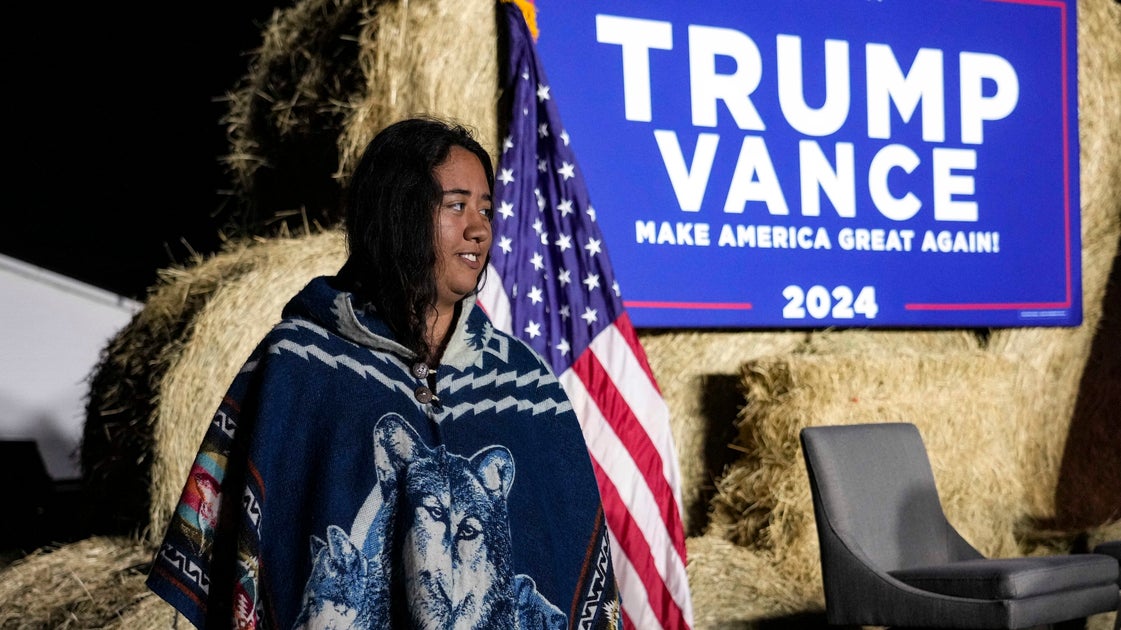
The Lumbee tribe, a massive group with about 55,000 members, was all in for Trump in the 2024 election. Just before the election, the tribe’s official Facebook page posted a photo of its chairman, John Lowery, standing alongside Donald Trump, Jr. Its members overwhelmingly turned out for Trump and arguably helped him win this crucial swing state — a detail not lost on the president.
Their support for Trump paid off this week, as lawmakers tucked language into a fast-moving defense bill to grant full federal recognition to the Lumbee tribe. The tribe has been fighting unsuccessfully for this recognition since 1888, as it would grant them access to millions of dollars in federal funding for Native health and education programs. It would also elevate the tribe to the status of one of the 574 federally recognized tribes nationwide.
The defense bill sailed through the House on Wednesday and is set for Senate action on Monday. It could be on the president’s desk in a matter of days. Incredibly, Trump singled out the Lumbee tribe as a key priority in the defense bill, in the White House’s official Statement of Administration Policy released last week in support of the bill.
“I’m deeply grateful to President Trump for his longstanding championship of the Lumbee Tribe and for working across both chambers of Congress to deliver the full federal recognition and rights our people deserve,” Rep. Mark Harris (R-N.C.), who led on the issue in the House, said in a statement.
Neither Lowrey nor the Lumbee tribe responded to requests for comment about being on the verge of securing federal recognition, or on the role Trump played in making this happen.
The White House did not respond to requests for comments.
But the inclusion of the Lumbee provision in the defense authorization bill, a measure that otherwise sets defense policy and authorizes annual funding levels, comes over the strong opposition of dozens of tribes that have been engaged in a bitter, complicated fight over the legitimacy of the Lumbee tribe.
The Lumbee provision has nothing to do with defense issues, but lawmakers routinely stuff all kinds of non-defense-related issues into this bill for quick passage. While there aren’t any senators openly opposing the Lumbee tribe hitching a ride on this bill, some are frustrated to see the Lumbee getting special treatment in a 3,086-page bill that doesn’t include any of their tribal priorities.
Sen. Lisa Murkowski (R-Alaska), the chair of the Senate Indian Affairs Committee, said Tuesday there was a “very negotiated process” for adding items to the defense bill, and she had been hoping to include “many of the other less controversial matters” that were important to tribes.
“We were not successful in that,” Murkowski told HuffPost, “which was disappointing.”
One of the chairwoman’s priority bills, the Truth and Healing Commission on Indian Boarding School Policies Act, which would create a commission to investigate the ongoing effects of the federal government’s horrific previous policy of forcing Indigenous children into white assimilation schools, didn’t make the cut for the defense package.
North Carolina lawmakers have played hardball for years to try to get the Lumbee tribe federal recognition, and they’ve angered colleagues in the process. Sen. Thom Tillis (R-N.C.), who has led on the issue in the Senate, has been blocking other senators’ tribal bills and judicial nominees to pressure them to support his Lumbee bill. His predecessor, former Sen. Richard Burr (R-N.C.), did the same.
Sen. Mike Rounds (R-S.D.) is one of the senators with a tribal bill that’s been stalled by Tillis’ efforts. His measure, the Wounded Knee Massacre Memorial and Sacred Site Act, would place 40 acres of land at the site of the Wounded Knee Massacre of 1890 into restricted fee status, ensuring the land is held by the Oglala Sioux and Cheyenne River Sioux tribes.
Asked for his thoughts on the Lumbee provision making it into the defense package, he emphasized he’s never fought the tribe getting federal recognition. He just wanted his tribal bills to get through, too.
“We’ve had our very important bill, which allows our Native American tribes to recognize the Wounded Knee issue,” Rounds said Wednesday. “All they want to do is put that land into trust so that it can be protected for posterity. And you have two tribes working together to get it done. It’s all for the good.”
He said he didn’t know how many tribal bills have been sidelined over the years by North Carolina’s senators, expressing agitation.
“Look, there was nothing wrong with these other proposals, but they’ve been held hostage,” Rounds said. “I don’t agree with that, but that’s the reality we face.”
Both Murkowski and Rounds said now that the Lumbee issue is moving, they expected the Senate to finally take up some of the other tribal bills Tillis has been blocking. That played out Thursday evening, as 12 tribal bills, including Rounds’ Wounded Knee bill, were unanimously passed in one big block.
But most of those bills still won’t become law yet. Only two of the 12 have already passed the House, meaning the other 10 still have to get through that chamber.
And Murkowski’s bill wasn’t included in that mix, either.

North Carolina lawmakers have introduced bills to recognize the Lumbee tribe more than 30 times since 1988, but none have become law. Their path has been complicated: A 1956 federal law, the Lumbee Act, partially recognized the tribe but denied it access to federal benefits available to other federally recognized tribes.
Senators said Tillis deserves the most credit for making it finally happen.
“This is his legacy,” said former Sen. Kyrsten Sinema (I-Ariz.), a close ally to Tillis who happened to be in the Senate on Tuesday.
Sen. Brian Schatz (D-Hawaii), the top Democrat on the Senate Indian Affairs Committee and a supporter of the Lumbee tribe’s efforts, claimed Tillis played a bigger role than Trump in securing this Lumbee provision in the defense bill.
“This is 100% Thom,” said Schatz.
Tillis’ office did not respond to a request for comment.
But not everyone agrees that this is simply the product of long negotiation and dedicated advocacy. There’s a reason the Lumbee have been fighting for this for decades, and critics of the tribe’s efforts to secure recognition are furious to see them catching a ride on the defense bill, saying it’s only happening because of the current president.
“One hundred percent, this is Trump,” said one longtime Lumbee opponent familiar with the history of the tribe’s fight, who requested anonymity to speak freely. “The fact that there’s no other Indian bill in there tells you that this is not being treated as an Indian bill. It’s being treated as a Trump priority.”
Dozens of federally recognized tribes oppose the Lumbee ever getting full federal recognition by Congress. The Eastern Band of Cherokee Indians, the only federally recognized tribe in North Carolina, has led more than 100 tribes in an effort to prevent the passage of any bill that would grant recognition.
Why? They claim the Lumbee tribe isn’t a real tribe and likely wouldn’t meet the stringent criteria required by the Interior Department’s federal recognition process that other tribes have gone through for their recognition. They warn that if the Lumbee tribe is granted federal recognition without meeting those requirements, it opens the door to other groups claiming to be tribes, with no evidence, thereby weakening every tribe’s sovereignty.
The Lumbee tribe doesn’t have a treaty relationship, for example, or a tribal language. Other tribes have disputed its descent from a historical tribe, a requirement for recognition in the Interior Department’s review. The Lumbee’s claims to descent have changed over the years, ranging from claiming ties to the Sioux to the Cherokee to the Croatan tribes, which has angered those tribes and others, as they take their own tribal identity and history very seriously.
The Lumbee tribe says the attacks it’s faced are misleading, as its members are survivors from a diverse mix of tribes and nontribal groups, which shouldn’t be used against them. They cite evidence of ties to a Cheraw settlement in 1754 in North Carolina, and point to research into the tribe’s membership based on prominent surnames. Lowery, the tribe’s leader, has suggested the real reason the Eastern Band of Cherokee Indians opposes his tribe getting recognition is tied to economic interests in the state, like casinos.
The Lumbee has supporters in some tribes, too, including the Catawba, Mashpee Wampanoag and Oneida of Wisconsin. There’s also the argument that the Interior Department’s requirements are flawed, something Schatz, a Hawaii senator who represents Native Hawaiians, has said he believes.
In short, it’s an incredibly sensitive topic for a broad mix of tribes. The National Congress of American Indians, the largest and oldest Native organization in the country that represents tribes, did not respond to requests for comment on its position.

This ongoing conflict is coming to a head now that the Lumbee tribe is on track to receive federal recognition through legislation, which is another way tribes can seek federal recognition — a process that’s faster and less intensive than via the Interior Department.
The Eastern Band of Cherokee Indians, for one, is outraged by the past week’s fast-moving developments.
“We are deeply disappointed and alarmed to see the inclusion of Lumbee recognition language in the National Defense Authorization Act,” Michell Hicks, the tribe’s principal chief, said in a statement provided to HuffPost. “A national defense bill is not the appropriate place to consider federal recognition, particularly for a group that has not met the historical and legal standards required of sovereign tribal nations.”
Hicks fumed about the Lumbee using what he called a “procedural shortcut” to seek recognition through Congress, and said it dangerously injects politics into a necessarily strict review process.
“Once recognition is granted without an evidentiary review, the standing of all federally acknowledged tribal nations becomes more vulnerable to political shifts rather than being anchored in history and law,” said the principal chief.
But some senators have taken offense to the idea that the Lumbee tribe is getting off easy by going the legislative route. The Senate Indian Affairs Committee held a hearing last month specifically on the Lumbee’s federal recognition, which included testimony from Hicks and Lowery. Without naming names, Schatz got testy about claims that the Lumbee tribe is essentially cheating its way to recognition.
“You can think we should defer to the administration, but we don’t have to,” Schatz said to no one in particular, facing Hicks. “Article I, Section 1 of the Constitution gives us this authority.”
“Some of the organizations that have been steadfastly opposed to Lumbee recognition have actually made advertisements about ‘circumventing the administrative process’ and ‘undermining the tribal recognition process’ by going to Congress,” Schatz said. “My own view is that this is a congressional authority, that the [Interior Department] has screwed this up generation after generation, and that it’s time for us to make a choice.”

These tensions will still be there after Trump signs the defense bill with the Lumbee provision in it, which is almost certainly going to happen in the coming days.
Some tribal leaders sarcastically described the “cold comfort” they get in knowing how much federal money the large Lumbee tribe will get, as their own tribes remain underfunded. The federal government has chronically underfunded tribes, and the Lumbee tribe would be the largest federally recognized tribe east of the Mississippi River, giving it an outsize role.
It’s not clear how much federal funding the Lumbee would be entitled to, but past estimates by the Congressional Budget Office have ranged from $300 million to $700 million over five years.
“We look to the Committee to check all the math and ensure that our Treaty obligations are fulfilled irrespective of what other policy choices Congress might make with respect to recognition of a new and very large tribe,” J. Garret Renville, chairman of the Coalition of Large Tribes, wrote to the Senate committee last month.
This coalition, which represents 52 federally recognized tribes that govern large land bases of 100,000 acres or more, also condemned Tillis in its letter, saying he “grotesquely maligned tribal leaders” in a Senate floor speech he gave while blocking the Wounded Knee bill.
Lowery signaled he’s not ready to move past the fighting, either. In a Thursday post on social media, he urged his tribe’s members to “never forget” how the Eastern Band Splinter Group has treated them, an apparent reference to a faction of the state’s Cherokee tribe.
“There should be no easy talk of ‘working together’ or ‘reconciliation’ with those who have spent a generation undermining our identity and dignity,” said the Lumbee tribe chairman.
“We do not hate them, nor do we wish them harm. But we must be wise,” he added. “A snake may shed its skin, but it remains a snake, and the Lumbee have been dealing with the bite for over 30 years. Our future leaders must carry that understanding forward, always.”