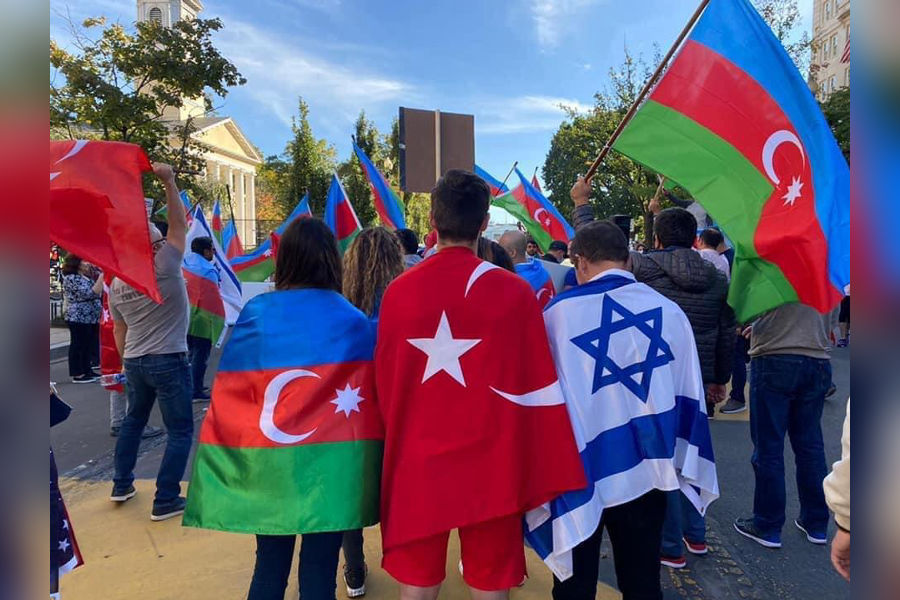
The geopolitical reconfiguration of the South Caucasus follows patterns that transcend purely regional dynamics. At the center of this transformation lies the trilateral relationship among Azerbaijan, Israel and Turkey — a strategic alliance that has fundamentally altered the balance of power in the region. This partnership, built on converging security interests and expansionist visions, represents one of the most significant developments in Eurasian politics in recent decades.
From an analytical perspective, this triangulation cannot be understood merely as cooperation among sovereign states. It is better seen as a strategic symbiosis in which each actor contributes complementary capabilities that, when combined, create a multiplier effect with profound implications for regional stability. The partnership has proven particularly disruptive for Armenia, a country trapped in a complex security predicament and for Iran, whose northwest now faces unprecedented strategic pressures.
The foundations of a strategic partnership
The relationship between Azerbaijan and Israel is one of the most peculiar cases of international cooperation.
A predominantly Muslim country maintains one of the closest partnerships with the Jewish state, defying conventional narratives about alignments.
This relationship rests on two fundamental pillars: energy and security.
In the energy sphere, Azerbaijan has become a crucial hydrocarbon supplier to Israel, providing roughly 40% of its oil needs. This commercial relationship generates significant revenue while providing Tel Aviv with a diversified and strategically secure energy source. More significantly, this economic interdependence creates shared interests in containing Iranian influence and maintaining transport routes that bypass Armenian territory.
The security component is even more critical. Israel has become Azerbaijan’s main supplier of advanced weaponry, with sales including Heron and Harop drones, artillery systems and intelligence technology. These transfers were decisive in the 2016 and 2020 conflicts, where Azerbaijani technological superiority proved crucial. In return, Israel gains privileged access to territory near Iran, as well as intelligence cooperation concerning Iranian activities.
Turkey completes this triangle by acting as the strategic connector and force multiplier. Ankara has deepened its relationship with Baku to the point of describing it as “one nation, two states,” reflecting a closeness that transcends conventional alliances. Turkish support materializes not only through military equipment but also through direct advisors, joint training and unconditional diplomatic backing.
Iran’s security dimension and the challenge of Pan-Turkism
Iran’s sizable Azeri minority — roughly one-fifth of the population — introduces a crucial factor in this geopolitical equation. Tehran views the minority through a largely security-focused lens, despite the paradox that Supreme Leader Ayatollah Ali Khamenei belongs to the same ethnic group.
Two factors drive this securitized perspective. First, Baku’s embrace of pan-Turkism, defined as a political movement seeking the unification of Turkic-speaking peoples. Second, and more critically, the close ties between Azerbaijan and Israel, which Tehran interprets as a hostile alliance aimed at encircling Iran.
From the perspective of Iran’s Ministry of Foreign Affairs, the resurgence of pan-Turkism is primarily attributed to the rise of Turkey’s ruling AKP and its perceived expansionist policy in the South Caucasus. Among Turkic-speaking countries in the region, Azerbaijan is the only one to consistently embrace this doctrine.
For Iran’s political and military circles, the Turkish-Azerbaijani convergence threatens its territorial integrity. Tehran has accused both governments of inciting “separatist movements” among Iran’s Azeri population, citing statements from Turkish and Azerbaijani officials and semi-official media advocating for the “liberation” of so-called “Southern Azerbaijan,” a term referring to Iran’s Azeri-majority northwestern provinces.
Iran’s concerns are further amplified by what it describes as “historical distortion” in Azerbaijan’s educational system, which includes references to a “Greater Azerbaijan” encompassing territories within Iran, instilling expansionist narratives in younger generations.
Reconfiguring the regional security landscape
The combination of Israeli technology, Turkish capabilities and Azerbaijani resources has fundamentally altered the security equation in the Caucasus. The most immediate result has been a shift of the traditionally fragile military balance between Armenia and Azerbaijan in favor of the latter.
The 44-day war in 2020 demonstrated the effectiveness of this strategic combination. Israeli drones, operated with Turkish technical support, enabled Azerbaijan to systematically neutralize Armenian defenses, including artillery systems, armored vehicles and critical infrastructure.
This technological asymmetry not only tipped the balance of the conflict but also set a dangerous precedent for resolving territorial disputes through externally acquired military superiority.
Even more concerning is the emerging military doctrine that blends Israeli precision capabilities with Turkish offensive doctrine. This fusion has created a model of warfare that prioritizes offensive initiative and the denial of adversary’s response capacity. For Armenia, this translates into chronic vulnerability, where conventional deterrence becomes insufficient.
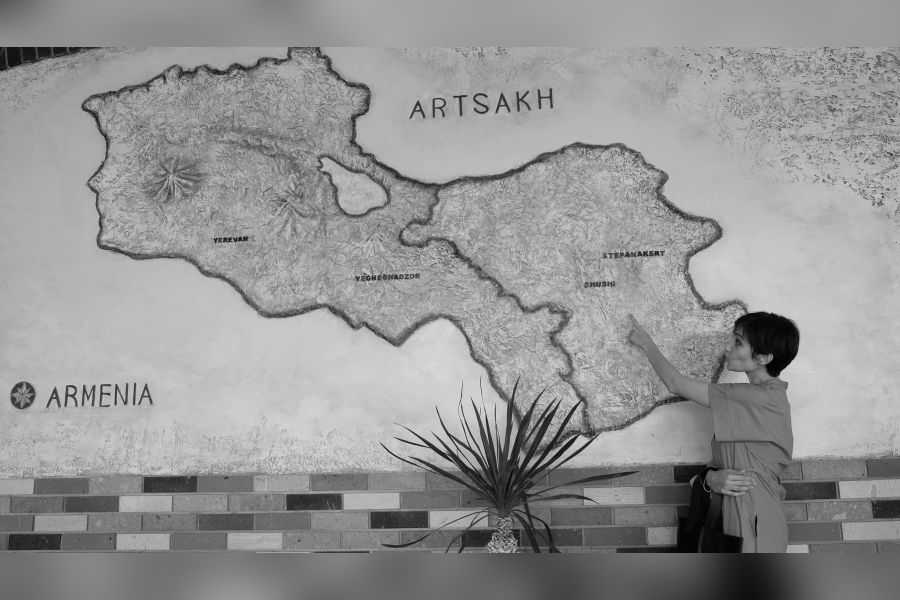
The psychological and political dimensions of this partnership should not be underestimated. The implicit guarantee of continued backing by powerful regional militaries has hardened Azerbaijan’s negotiating position in discussions over the status of Nagorno-Karabakh. This creates an environment where diplomacy unfolds under the shadow of overwhelming military advantage, eroding the basis for an equitable negotiated settlement.
Implications for regional stability
The consolidation of this trilateral axis has repercussions that transcend the Armenian-Azerbaijani conflict. Its existence alters the strategic calculations of all regional actors and redefines spheres of influence in the South Caucasus.
For Iran, the alliance presents a multifaceted challenge. Israeli capabilities near its northern border create a potential second front, while Azerbaijan’s pan-Turkic ambitions risk stirring separatist sentiment among Iran’s Azeri population. Tehran has responded cautiously, maintaining functional relations with Baku while discreetly reinforcing defenses in its northwest. However, the current dynamics severely limit Iran’s maneuverability, forcing a reactive posture in a region vital to its national security.
Russia, historically the security guarantor in the Caucasus, faces its own contradictions. Moscow maintains a formal alliance with Armenia through the Collective Security Treaty Organization (CSTO), while simultaneously cultivating strategic relationships with Azerbaijan and Turkey. This increasingly difficult balance reflects the complexity of maintaining influence in a region where multiple powers exert pressure.
The net result is a regionalization of the conflict, with local dynamics subordinated to broader geopolitical competitions. Armenia finds itself trapped between these contending forces, with diminishing ability to determine its own strategic fate.
Future prospects and emerging challenges
The evolution of this trilateral partnership suggests consolidation rather than dissolution. Converging interests among the three actors appear robust enough to withstand potential tensions from political and cultural differences.
The main challenge to this alliance will likely emerge from its own success. An excessively strengthened Azerbaijan may eventually feel less need for Turkish-Israeli support, particularly if it achieves its immediate territorial objectives. Likewise, shifts in Israeli or Turkish domestic politics could alter the strategic calculations underpinning this cooperation.
For Armenia, reality necessitates a fundamental reassessment of its security posture. Exclusive reliance on Russian guarantees has proven insufficient against the combination of capabilities it faces. This explains Yerevan’s recent efforts to diversify its international partnerships and explore closer ties with powers such as France and India.
Iran, for its part, faces the dilemma of responding to this challenge without triggering an open escalation. The perceived threat of pan-Turkism, combined with Israeli military presence on its borders, creates a particularly volatile strategic environment. Tehran will likely continue strengthening its ties with Armenia as a natural counterweight, while exploring opportunities to exploit tensions between Turkey and its Western allies.
The international community watches these developments with growing concern. The model of resolving conflicts through technological military superiority sets dangerous precedents that could be replicated in other frozen conflicts.
More fundamentally, the erosion of principles such as territorial integrity and the inviolability of borders threatens the foundations of the post–World War II international order.
Conclusion: Toward a new balance
The Azerbaijan-Israel-Turkey strategic triangle represents one of the most significant geopolitical reconfigurations of the post-Soviet era. Its emergence reflects the convergence of interests among disparate actors united by common goals of containment and expansion of influence.
The implications of this partnership extend far beyond the Nagorno-Karabakh conflict. They redefine alignment patterns in the South Caucasus, alter the regional balance of power and create new dynamics of strategic competition involving both regional and global powers.
The pan-Turkic dimension adds a layer of complexity, transforming what might be a conventional interstate rivalry into a conflict with deep identity-based and security-related dimensions. For Iran, this represents an existential challenge that touches on the most sensitive aspects of its territorial integrity and national cohesion.
The future stability of the Caucasus will depend critically on whether a new balance emerges that accommodates the legitimate security interests of all actors involved. The alternative — a region permanently divided into mutually exclusive spheres of influence — would herald an era of prolonged instability, with implications far beyond regional borders.
What is clear is that the old order has disappeared irrevocably. The new strategic realities demand new security approaches, new diplomatic architectures and, fundamentally, a new consensus on the principles that should govern interstate relations in this complex and crucial region. The management of the pan-Turkic factor and its impact on regional minorities will likely play a decisive role in determining whether this new balance is peaceful or conflictual.