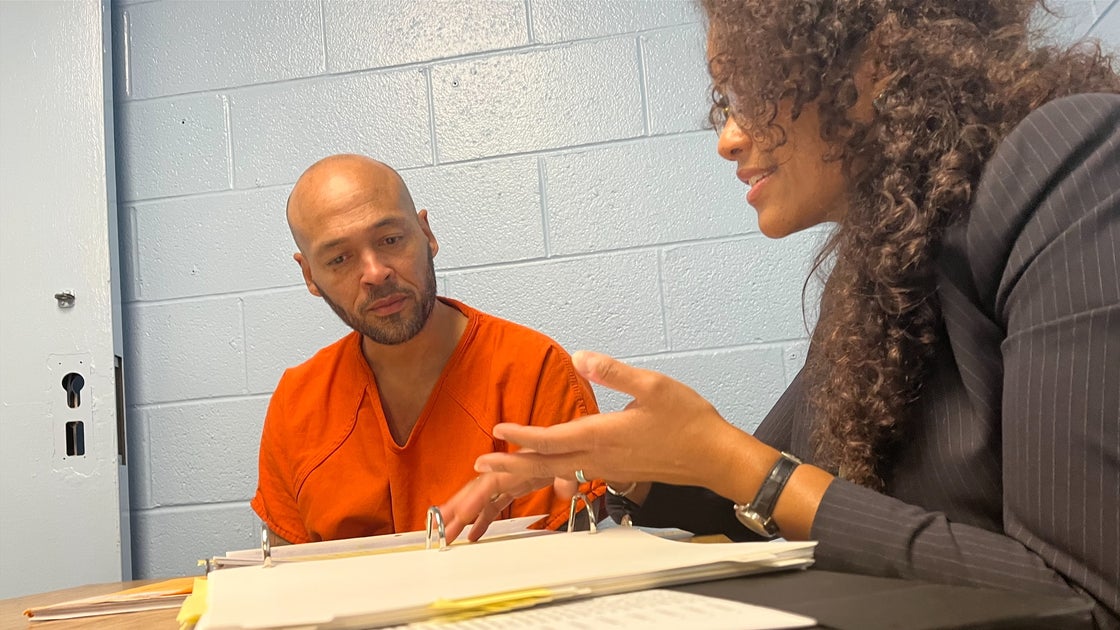
In Oklahoma, the state with the highest execution rate in the country, it is exceedingly rare for a person on death row to receive clemency. Since the death penalty was reinstated in 1976, just six people in the state have had their death sentences commuted. The last two, Julius Jones in 2021 and Tremane Wood last month, were represented by the same legal team: federal public defender Amanda Bass Castro Alves and investigators Lamont Williams and Rebecca Postyeni, from the Arizona Federal Defender’s Capital Habeas Unit.
Jones and Wood are both Black men who were sentenced to death in cases involving white victims, by nearly all-white juries during the height of death penalty prosecutions in Oklahoma. (Black people are disproportionately sentenced to death, and a 2020 study found that defendants convicted of killing white people were executed at a rate of 17 times greater than those convicted of killing Black people.) Both men were represented at trial by court-appointed lawyers who would later admit to doing a poor job defending their clients.
Jones was convicted of the 1999 murder of Paul Howell, a crime he has always said he did not commit. No one on his legal team had ever worked a death penalty case, and his lead attorney later said he was “terrified” because of his “inexperience.” Once Jones’ case reached Bass Castro Alves’ team, they discovered that jurors never heard from Jones’ family, who could have provided an alibi, or from a man who said that Jones’ codefendant admitted to the killing. They also tracked down a juror who recalled another juror calling Jones the N-word during deliberations and saying the trial was a waste of time.
Those revelations weren’t enough to get Jones a new trial — but they did help spur a national pressure campaign calling for mercy. Ultimately, Gov. Kevin Stitt (R) granted Jones clemency in the hours before his scheduled execution.
A few years after Jones’ arrest, prosecutors sought death sentences against Wood and his older brother for the killing of Ronnie Wipf during a botched robbery. Under the state’s felony murder statute, prosecutors didn’t have to prove who actually killed Wipf in order to secure convictions — only that they each participated in the robbery that led to his death.
Wood denied killing Wipf, but was represented by a lawyer who did almost no work on the case. He was sentenced to death. His older brother, who testified at Wood’s trial that he was the killer, had an experienced capital defense team. He received a life sentence, but died by suicide shortly after his brother became eligible for execution.
Again, Bass Castro Alves’ team discovered a litany of issues in Wood’s case. There was evidence that his trial lawyer used drugs and alcohol before going to work while representing Wood. The only Black juror on the case would later say she felt pressured into voting for death. Prosecutors lied about incentives offered to witnesses in exchange for their testimony, and one of the judges overseeing Wood’s appeal appeared to be friends with the prosecutor Wood was accusing of misconduct. In the final weeks ahead of Wood’s execution date, the state’s attorney general secretly sought help from another judge to ensure the killing would go forward.
Within the Oklahoma death penalty abolition community, Bass Castro Alves and her team are regarded as miracle workers. “God has used them before. God can use them again,” Rev. Keith Jossell, Jones’ spiritual adviser, said at a prayer vigil in Oklahoma City the night before Wood’s execution date.
During a legal visit just ahead of Jones’ scheduled execution in 2021, Wood encouraged their shared legal team not to give up hope. Four years later, it was Jones’ turn to pray for Wood. “You guys have been here before,” Jones told the legal team. “If anybody can do it, you guys can do it.”
On Nov. 13, minutes before Wood’s killing was scheduled to begin, Stitt granted his clemency request.
HuffPost spoke with the team about how they approach investigation, litigation, community organizing and the increasing level of opposition to the death penalty in bright-red Oklahoma.
This conversation has been edited and condensed.

Courtesy of the legal team that represented Julius Jones and Tremane Wood
By the time a case makes its way to your office, it’s been through multiple unsuccessful rounds of state direct appeal and post-conviction review, which limits the scope of what you are able to litigate. Can you describe some of those limitations?
Amanda Bass Castro Alves: In federal court, we are limited by the Antiterrorism and Effective Death Penalty Act, which requires federal courts to give extreme deference to the decisions of the state courts that came before. Oftentimes, in federal habeas, we’re not arguing about whether a person’s constitutional rights were violated — we’re instead having to argue at the threshold about whether or not the state court’s determination that this person’s federal rights were not violated was reasonable or unreasonable for purposes of overcoming the stringent procedural bar under the Antiterrorism and Effective Death Penalty Act.
That really limits what we are able to do, because we are dependent on what the prior lawyers raised in state court on behalf of a client. Oftentimes, if claims get missed or they weren’t raised properly, we have to go through a number of hurdles to try to resurrect those claims in federal court.
Even when you’re trying to get back into court on new evidence, we have to overcome stringent state procedural bars. There’s a strict 60-day statute of limitations — if you don’t get back into court within 60 days of discovering new evidence, you’re barred in a death penalty case. And you also have to show that this new evidence rises to such a level that it would have shown, by clear and convincing evidence, that this person would not have been convicted or sentenced to death but for this issue affecting their case. So that is a very difficult bar to overcome just to get a hearing in Oklahoma state court on a new evidence issue. And there are additional hurdles to getting relief on the basis of those new issues.
It doesn’t stop us from investigating, it doesn’t stop us from trying to get back into court — but it does explain why, in both Julius’ and Tremane’s cases, they both reached the brink of execution before they were spared, because often relief isn’t possible through the court.
In Tremane’s case, when he first raised ineffective assistance of counsel claims, it was like, “Oh, you don’t have enough evidence that your trial lawyer was impaired at the time that he represented you.” And then you guys go out and get all these affidavits from people who say they’ve known [his lawyer] Johnny Albert the entire time he was representing Tremane, and saw him doing drugs and drinking alcohol before work during that time. But when you present this evidence, the judge says, “Well, you should have found this earlier, so now I can’t consider it.”
ABCA: Exactly. And that is the catch-22 that the procedural rules often put death sentence prisoners like Tremane in when they’re trying to exercise their right to discovery and an evidentiary hearing at their earliest available opportunity — which Tremane did, and the court did not give him a hearing or the opportunity to conduct discovery that would have allowed him to prove that Johnny Albert was drug-impaired at the time he was representing him. And then fast-forward to when Rebecca and Lamont do the diligent, pounding-the-pavement investigative work and find that proof, and we present that proof within 60 days, and the court says, “Well, too late, you should have actually uncovered this evidence when we first prevented you from uncovering the evidence.”
Lamont Williams: To discover that an attorney was drinking and abusing drugs during a death penalty trial is shocking. Those are the kinds of situations that you read about, but to actually have it occur on a case that you’re working on, and to get multiple affidavits and so much more evidence to prove that this was actually happening during the trial — you just think to yourself, “These are the kinds of things that the courts should consider and people should be alarmed about and that show when a capital trial goes wrong. This is clear and convincing evidence.”
But then to be shot down by a court so easily because of something like the timing or the procedural bars — it’s kind of a disgrace to the system.
Rebecca Postyeni: And the [financial] resources are backward. We’re uncovering this way after all these procedural bars allow it [to be raised in court], but this could have been uncovered right away had the resources been flipped around.
Right. You don’t get this kind of robust team with multiple investigators until it’s too late to raise what you find in court. Given all of these limitations, you have to find creative ways to litigate and to even get into court. What does that process look like? What do you do when a case first hits your desk?
LW: As an investigator, we’re looking for new information and new evidence that wasn’t presented at trial, but also just learning the case. As a starting point, you want to review everything that happened at trial and preceding trial in terms of court records and transcripts, but also, we set out to interview the family members and witnesses and sort of just retrace the crime investigation. Really just learning as much as we can about the case, about the witnesses, and of course, about our client.
That sort of lays the groundwork for the work that we ultimately end up doing, which is identifying issues that we think deserve attention from the courts.
RP: Just to piggyback on that, I treat a new case like a pretrial case. When I was doing trial work, I just start at the bottom and re-look at everything, read everything, re-investigate everything. Because in some cases, like Julius’ and Tremane’s cases, even the basic work of meeting with a client to build a relationship, to get information — both of those cases have things that we learned that could have been developed just by meeting with the client and talking to them, which is just so basic, but it wasn’t done.
So just starting over and working it out from the bottom — and not thinking about the procedural bars that are potentially going to shoot down these issues, because Amanda has a way to get creative.
Amanda, can you talk about what it’s like for you?
ABCA: You start reading the record and really knowing the facts in your client’s case and trying to really understand everything that happened before, while also building that relationship of trust with your client and getting their perspective. Figuring out what is corroborated by other stuff in the record, versus what do we not have evidence for. Then we need to go and try to find evidence to prove how this happened or to show this or that. Really making the client the center of their own representation.
There’s a lot of deliberation and team discussion around what we’re finding, questions we have, what should we then look to investigate, and based on what Rebecca and Lamont investigate and develop factual support for, how can we then turn that into litigation?
That’s how the process unfolded in both Julius’ and Tremane’s cases, which allowed us to pursue some rich litigation — and even though it wasn’t successful through the courts, it was really important to the overall effort to show why clemency was really needed. Because the courts are not backstops.

Courtesy of the legal team that represented Julius Jones and Tremane Wood
You kind of alluded to this, but many of your clients, including Julius and Tremane, had negative experiences with their trial attorneys. In Tremane’s case, his lawyer never visited him in jail, billed just two hours of work outside of court and later temporarily lost his law license after admitting to client neglect associated with his addiction struggles. I would imagine that can make it difficult to earn the trust of your clients and their families. How do you overcome that?
LW: We spend so much time with our clients, learning from them and hearing about their experience and the facts of their case. We can’t simply rely on the record. We also have to invest the time and energy in getting out and talking to people, whether it’s our client, whether it’s other witnesses that were involved in the crime, or historically, the family witnesses. It’s a huge endeavor of spending time with these people, face-to-face time. Really hearing their stories and respecting their experiences so that they do feel comfortable sharing with you.
I learned so much just from working with this particular team. We do bring separate sets of skills to our team, and it’s been really invaluable to put our heads together and figure things out. As challenging as things have been, and at times, really feeling impossible, we are able to lean on each other, hear from each other, support one another, and really make it through to the other side.
RP: One way that sticks out in my mind about earning trust of clients at this stage is just really listening and following through with what they said. Like, actually going out and doing the work after we discussed a particular issue. Even if it might be silly or we think it’s not going to prove anything groundbreaking.

Illustration: HuffPost; Photos: Oklahoma Pardon and Parole Board
I was struck by Tremane’s family’s willingness to discuss with me — and even contribute to the court record — things about his childhood that are painful or unflattering to some of the people providing that information. But once I realized how long you had been building those relationships, it was clear that they were willing to do that because they trust you and the team.
In Tremane’s case, your team presented lots of evidence of collusion and conflicts of interest between multiple judges and prosecutors involved in his late-stage appeals. But the Supreme Court ultimately declined to intervene to stop his execution. Given the unreliability of the courts in rectifying miscarriages of justice in capital cases, your team simultaneously does a lot of political and community organizing work while pushing for clemency. Can you talk about what that looks like?
ABCA: Both in Julius’ and Tremane’s cases, we saw the power of community in rising up to also support mercy for both of them. The community that developed around Julius’ case was really the result of “The Last Defense,” which was produced in 2018 by Viola Davis and her husband Julius Tennon’s company at ABC, that really spotlighted for folks the injustice in Julius’ case. And that was a decision that we as a team really talked at length about, whether we would engage in that very sort of public effort to elevate Julius’ story. We also talked at length with Julius about that decision.
We saw the fact that people were mobilized when that aired in 2018 and people became aware of just how many systemic breakdowns existed in Julius’ case that led someone who is innocent to the brink of being executed; it mobilized them to action. We saw people in Oklahoma and around the country rising up, developing petitions and writing letters to the governor and organizing public events — really doing so in creative ways that we did not control or dictate.
Similarly, in Tremane’s case, the community that rose up around him was really a function of some really incredible advocates and community leaders, including Brett Farley at the Catholic Conference of Oklahoma, Demetrius Minor at Conservatives Concerned About the Death Penalty, Joia Thornton, the director of the Faith Leaders of Color Coalition, Mrs. Cindy Birdwell, Tremane’s sixth-grade teacher. It was just a really wonderful process through which we learned a lot from those community leaders and advocates about what they believed the public and Oklahoma decision-makers needed to know in order to make the right and just and fair decision in his case.
LW: We learned so much from Julius’ case — the way things after “The Last Defense” just took off — it became out of our hands, and it became more of a community effort, but also working together with our team to fight for Julius.
Amanda talks about movement lawyering and how important that is. To be able to experience that was huge. To be able to learn what we did and take that to Tremane’s case in Oklahoma was hugely helpful, even though we took a very different approach. It was a much more intimate approach. Both are such great examples of how people do get invested and get interested and get outraged and bothered and concerned about all of these issues when it affects people in their own communities.
RP: Julius has an institute now, he has a whole organization. And so does Tremane. It went beyond them getting clemency.

Courtesy of the legal team that represented Julius Jones and Tremane Wood
Ahead of Julius’ case, there was this tremendous public, national pressure in support of clemency. Kim Kardashian was involved, there were professional athletes calling for clemency, students walkouts, so much on Instagram educating people about the case. His clemency push was in 2021, the year after the George Floyd protests, when there was more public attention to the ways the criminal justice system disproportionately punishes Black people. It was a very different landscape by the time Tremane requested clemency — and in some ways, his case was less straightforward since it wasn’t an innocence case. How do you think clemency still came together?
ABCA: It’s a hard question. So much work has been done in Oklahoma by people in Oklahoma around the death penalty process, and the ways in which there are systemic flaws, that should give leaders pause when it comes to signing off on an execution or a death sentence. I’m thinking of the 2017 report of the Oklahoma Death Penalty Review Commission, which was groundbreaking. A bipartisan group of Oklahomans took the time to study Oklahoma’s death penalty process and issued a powerful report with recommendations for reform to really target issues that were issues in both Julius’ and Tremane’s cases.
I think that report and the work of the folks on that commission together with the people on the ground in Oklahoma who litigate these issues day in and day out — folks at the Oklahoma Capital Habeas Unit, who are literally in the trenches and who have, in partnership with people in the community, been doing the work to to educate leaders, to push for legislative reform. Between Julius’ and Tremane’s cases, there was a moratorium bill that was being pushed within the legislature. There was also a felony murder interim study that we were grateful to be part of, where we were able to talk about Tremane’s case and the injustice of his death sentence for a felony murder conviction — that was in front of Rep. J.J. Humphrey’s committee.
So I think even though, in Tremane’s case, there was not the same sort of national and international push for mercy for him, so much of the pedagogical work and the day-to-day grassroots work to highlight and then try to rectify and educate state leaders on the issues in Oklahoma’s death penalty process really came to help Tremane. Because by the time we were going before the clemency board and before Gov. Stitt, they had a really deep understanding of some of these systemic flaws that we were then able to illustrate how those flaws played out in Tremane’s case to give rise to an unjust death sentence.
LW: With Julius’ case, it was maybe an easier thing for people to get on board with questions of innocence. And Tremane’s case was very different in that he was a participant in the crime. But also, there were these profound issues throughout the life of his case, whether we’re talking about the lack of attorney representation, the felony murder aspect of it. That the prosecution said that Tremane was the killer, but also that [his brother] Jake was the killer. With Tremane being such a young man and having the history that he had in the juvenile system and foster care system and his home environment — the really traumatic history that he’s had — it was important for people to know about that. To really know about his experience as a person — not to use the “abuse excuse,” as people refer to it, but to show that this is a human being who’s been through a specific experience. And a part of that experience is having real regret and remorse about what happened. Even though he wasn’t innocent, he was adamant that no one was supposed to die that day.
I’m also thinking about the profound grace that the victims in Tremane’s crime showed — both the surviving victim of the robbery and the mother of Ronnie Wipf, who was killed. I imagine that was very impactful.

Illustration: HuffPost; Photos: Jessica Schulberg
Can you share how Tremane is doing now?
LW: Tremane is just grateful to be alive. Grateful that the clemency board gave the recommendation to the governor, and that ultimately the governor granted clemency. He’s been talking about this second chance at life — he called it being a rebirth in a lot of ways. He’s just really thankful for everyone’s involvement. Us as a team, but also people like you, who have been covering his case so intently, and the advocates that have been working so hard over the last couple of years. He’s just super grateful and knows that it took a commitment from people in a lot of different ways. He’s very appreciative of that and just really looking forward to making the best of this second chance at life that he has.