(Source: Mil.ru via Wikimedia Commons)
Since 2022, the image of North Korea and the tone of coverage among Russian TV channels have changed significantly, following the strengthening of the bilateral relations. In November 2025, North Korea’s Korean Central News Agency (KCNA) and the Russian state-owned media agency Rossiya Segodnya signed a cooperation agreement, pledging to promote objective information about each other’s events and the lives of their citizens. The goals of developing media cooperation and countering disinformation campaigns were also mentioned in Article 20 of the 2024 Treaty on Comprehensive Strategic Partnership.
Russia’s ties with North Korea were weakened in the 1990s, when Moscow began preferring Seoul to Pyongyang, and their formal military alliance, which had existed since 1961, ended in 2000, when a new treaty was signed. After restoring the partnership in 2024, Russia had to reintroduce North Korea as a loyal ally and highlight the long history of cooperation. Promoting a positive image of North Korea through the state-affiliated media has become an important tool for improving how Russians perceive the country.
Tone Shift in 2017
The image of North Korea as an impoverished country with a malnourished and oppressed population was dominant for a long time, especially after the country faced famine and economic crisis in the 1990s. In the mid-2010s, life in North Korea was known to Russians as full of fear and constant state surveillance based on the film “Under the Sun” produced by Vitaly Mansky. Given the lack of up-to-date information about North Korea and the negligible number of Russian citizens visiting the country, Russians had, for a long time, a distorted understanding of North Korea’s current living conditions.
As such, Russian coverage of North Korea tended to focus mainly on its nuclear and missile programs. While news and talk shows had historically maintained a neutral tone, avoiding evaluative framing, that has shifted since 2017 to somewhat more positive coverage. This change occurred amid Russia’s growing frustration with the US and increasing sanctions pressure on both Moscow and Pyongyang. As Western restrictions against Moscow intensified, it intensified criticism of the use of both unilateral and multilateral sanctions, arguing that they target countries that act independently of the United States. North Korea, which faced comprehensive UN sanctions in 2017, was used as an example of a country that was punished for trying to assert its sovereignty and strengthen its military capabilities.
In this context, Moscow officially condemned North Korean missile launches in 2017, but news coverage conveyed the launches as a demonstration of North Korea’s sovereignty and resolve to act despite the US threats of tighter sanctions for violating international law. An episode of a TV program “Time Will Tell” on Channel One, for instance, highlighted that a long-range missile launch was conducted despite the US warning.
Aiming to improve perceptions of North Korea and show it as a usual place where people live ordinary lives, Channel One featured several short sketches in 2017 in its morning news program, demonstrating Pyongyang residents hurrying to work in the morning, women wearing colorful clothes and high-heeled shoes in the streets, and men stopping by the barbershop for a haircut and a shave. This footage was meant to inform the Russian audience that many misconceptions and negative facts about North Korea were no longer true.
Recent Narratives: The Most Sovereign Country on the Planet
Since 2022, as relations with Pyongyang have strengthened, Russian media has doubled down on efforts to portray North Korea as a normal state and has been highlighting its sovereignty and decisiveness to continue its political and military development despite Western pressure and sanctions.
In 2025, a weekly political program “Russian Lessons” hosted by a Russian writer and politician Zakhar Prilepin broadcast episodes about North Korea. An episode titled “DPRK – a star named the Sun: The most sovereign country on the planet” portrayed North Korea as a country that managed to achieve a high level of technological and economic development despite a hostile international environment. The host shared his experience visiting North Korean restaurants and bars, noting that they were comparable to European and American venues.
In an episode “Look – Korea is getting closer. With each day,” the author highlighted Korea’s loyalty and commitment as an ally, metaphorically noting that the global order is based now on “a Russian bear, a Chinese dragon, an Indian elephant, and our Comprehensive Strategic Partnership Treaty with North Korea. The Korean tiger is lurking nearby and is ready to do its part if we need help.” The emphatic narrative about North Korea’s sovereignty is not an accident, given the pressure of sanctions that have been imposed on Russia since 2022. North Korea provides an example of the importance of maintaining sovereignty and continuing a chosen political course despite the political or economic costs imposed by the West. This narrative aligns with the Russians’ perception of Western sanctions as ineffective. Opinion polls from 2025 indicate that 70% of Russian citizens believe the primary goal of the sanctions is to weaken and humiliate Russia, while 79% also believe that they would strengthen Russia or have no impact on the country at all.
Russian media, however, avoid mentioning how Moscow historically voted for imposing UN Security Council (UNSC) sanctions on North Korea that profoundly limited the country’s growth potential in the first place. While Moscow vetoed the extension of the mandate of the 1718 Panel of Experts in 2024 and have been advocating for the revision of sanctions on North Korea since 2017, citing the negative impact they have on the civilian population, it repeatedly supported their imposition, as the development of the North Korean nuclear program did not align with Russia’s security interests.
Recent Narratives: Mutual Respect and Historic Memory
Another aspect frequently highlighted in Russian media is the mutual respect between the two nations and the hospitality shown to Russian officials. The political talk-show “60 Minutes” on the Russia 1 channel featured an episode on Putin’s visit to Pyongyang in 2024, calling it an “epic” event and showing footage of the streets and the square in Pyongyang filled with people, welcoming the Russian president. The audience could see scenes of the grand reception: balloons floating in the air, a ceremonial artillery salute for the guests, and Russian songs echoing across the square.
Reporting on Lavrov’s June 2025 visit to Wonsan, when he signed a Plan of Inter-Ministerial Exchanges for 2026-2027, Channel One also emphasized to viewers that the minister was met with “cheers, an honor guard, and flowers.” The hosts put out a red carpet leading to the newly built talks venue, which Lavrov was the first foreign minister to visit. A warm welcome was also given to the delegation of State Duma deputies, who arrived to participate in the celebration of the 80th anniversary of liberation in August 2025.
The emphasis on a respectful manner of greeting Russian officials stems from the difficulties some of them faced visiting Western countries after 2022. Although North Korea has less diplomatic value in the eyes of Russians compared to Western countries or its influential Asian allies, such as China, the footage of the ceremonial reception was aimed at restoring national pride for the president and the government.
The media emphasized the respectful attitude toward historical memory and the tribute paid by allies to the Soviet soldiers who liberated Korea in 1945 and to the North Korean troops who fought near Kursk in 2024 and 2025. On August 15, 2025, the Russian military TV channel Zvezda aired a documentary titled “Russia – DPRK: Two sides of one river”, which narrated the story of Korea’s liberation by the Soviets. The film began and ended with recent footage of North Korean troops fighting in Kursk, establishing a connection between these two events in viewers’ minds.
An important topic was North Korea’s attitude toward military memorials dedicated to those who fell in past and present wars. An October 2025 report by Channel One highlighted that the Liberation Monument, built in 1946 to honor the Soviet soldiers, is maintained in an ideal state, as well as the tombs of the Soviet pilots who supported the DPRK in the Korean War. The episode claimed that “unlike Western countries, North Korea does not rewrite history.” Visiting the Liberation Monument became an essential part of Russian military officials’ trips to Pyongyang: Shoigu visited the place during his trip to Pyongyang in March 2025, followed by Deputy Defense Minister Goremykin in November. That feature matches the general importance of military memorials to soldiers who fell in World War II for Russia: large-scale memorials are located in various Russian cities and countries that were part of the socialist bloc. Even in smaller towns and villages in the European part of Russia, which were affected by the battles in 1941-1945, there are often small commemorative sites with the names of the soldiers who fell while liberating these areas.
Recent Narratives: North Korean Modernity
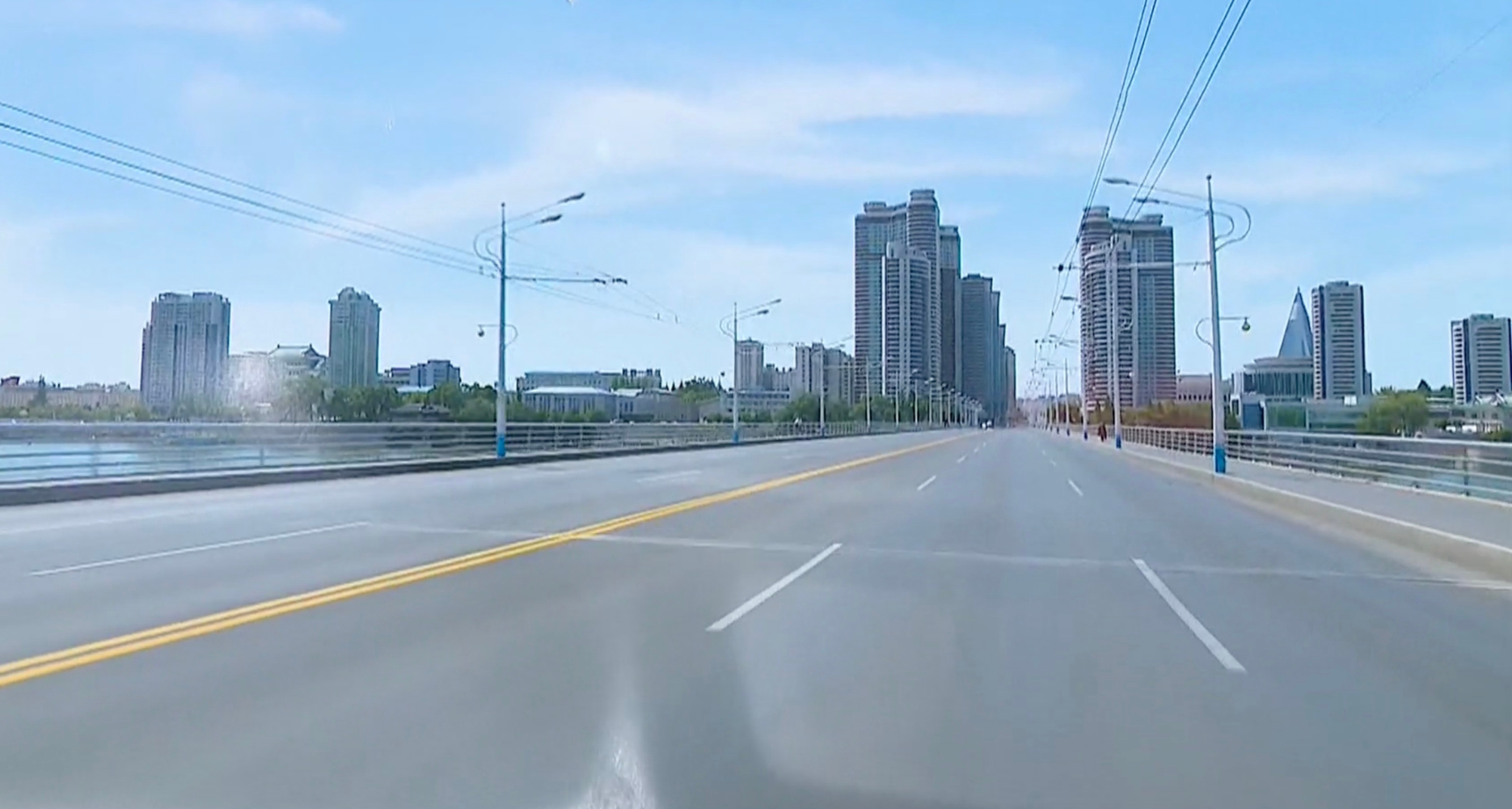
Efforts to improve North Korea’s image since 2017 have become more visible in recent years. The 2023 episode of the “60 Minutes” talk show reported that Pyongyang was experiencing a construction boom, showing footage of the opening of new residential areas. The correspondent noted that Kim Jong Un is believed to be the most liberal leader in the country’s history, granting North Koreans greater freedom in their everyday lives, including the right to wear colorful clothing, high heels, choose hairstyles, and use smartphones.
As North Korea opened to foreign visitors after the COVID-19 pandemic, Russian and North Korean authorities and travel agencies started to promote Russian tourism to the DPRK. The February 2024 Channel One news report shared the impressions of the first tourist group to visit Pyongyang and the Masikryong Ski Resort in winter 2024. The correspondent noted that the complex meets the standards of other world-class ski resorts and is equipped with modern facilities. After Russian tourists visited a newly built Wonsan Kalma seaside resort in summer 2025, a documentary “Moscow – Pyongyang. What’s happening beyond a border that’s long been closed?” was aired by Russia 24, where Russian tourists shared their positive experience of visiting the North Korean resort, praising the sandy beach and the high level of service. The documentary also featured the Songdowon International Children’s Camp and an interview with a participant, who admitted he had long hoped to visit North Korea.
Overall, the number of Russian tourists visiting North Korea increased fivefold from January 2024 to July 2025, in part due to improved transport connectivity. While for a long time only Maritime Province had a direct connection to North Korea, a flight from Moscow to Pyongyang was introduced in summer 2025 and featured in a Channel One news report.
Conclusion
Media support has become a powerful tool for Russia–North Korea cooperation, working to justify the current alliance with Pyongyang and present it as a loyal and trustworthy partner. Russian TV coverage of North Korea avoids critical commentary and maintains a respectful tone, portraying the country as having achieved economic and technological development despite international isolation and sanctions. While it does help the Russian audience get more real-time information and visuals of modern North Korea, focusing solely on the capital area and resort destinations without mentioning living conditions in smaller cities and rural areas creates an incomplete picture of the DPRK.