Maria Àngels Anglada’s Aram’s Notebook is slender in page count but oceanic in depth. The book tells the story of the Armenian Genocide, not through the typical panoramic lens of history, but through the intimate, fragmented diary of a 15-year-old boy.
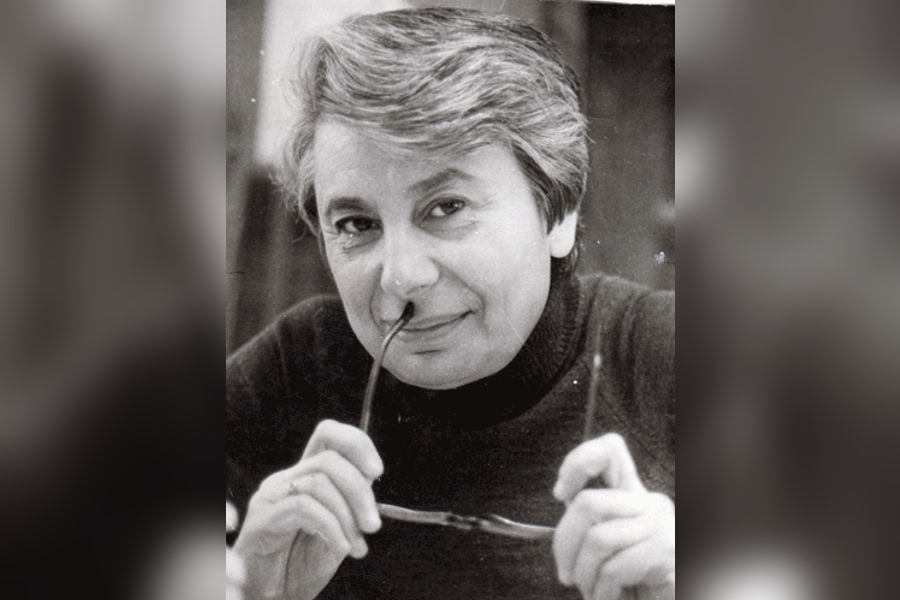
Anglada, a celebrated Catalan author who passed away in 1999, approaches this tragic history from a unique vantage point. She views the Armenian catastrophe through a Mediterranean lens, bridging the mountains of Anatolia with the sun-bleached coasts of Greece and Catalonia.
This new English edition, translated with a strong introduction by Ara H. Merjian, frames the novel as a “committed” literary act — a work designed to rescue memory from erasure. Merjian situates Anglada within a small “pantheon” of foreign authors who have tackled this subject, alongside Franz Werfel (The Forty Days of Musa Dagh) and Edgar Hilsenrath (The Story of the Last Thought).
Yet, Anglada’s work stands apart; it is a “literary mosaic,” composed of shards of memory that are as sharp as they are beautiful.
The story is anchored in the bond between two young exiles: Aram, an Armenian boy who has fled the massacres in Van, and Iorgos, a Greek coral diver whose family was displaced from the island of Symi. Their friendship is shaped by the silence of the underwater world, a metaphor Anglada uses for exploration and survival. The contrast between the two boys highlights the novel’s theme of shared displacement across the Mediterranean. As Anglada writes:
“The two friends smile, tired and satisfied… the Armenian is shorter, with eyes that are jet black, perhaps a bit sad. Iorgos is one of those blond Greeks… his laughing eyes were blue-green like the waters around Symi.”
However, the book refuses to let the reader linger in this aquatic safety. Through its fractured diary structure, we are pulled back into Aram’s past. We witness the forced marches, the hunger that makes a piece of “lavash” bread feel like a miracle and the terrifying randomness of survival. The violence is specific and graphic. Aram recounts the horror of witnessing a murder, a memory that scars the page:
“They tied my hands and the hands of the other taxi driver… then they pulled out their knives… to the horrible screams of those innocents, they stabbed them in cold blood, over and over.”
Threaded through the diary is the absence of Aram’s father, Vahe. As the translator explains, Vahe is explicitly modeled on Daniel Varoujan, the renowned Armenian poet and educator who was murdered in 1915. By turning a national literary icon into a beloved, missing father, Anglada personalizes a loss that is often too vast to comprehend. Aram’s grief is palpable and raw:
“I’m 15 years old, but I can’t help it. I cry out for my father… I always remember my father more than the other people in my family… I think about my father, who’s dead, who must have died with his weapons in his hands.”
This longing for a father who “died with his weapons in his hands” speaks to the desperate need for dignity amid humiliation — a wish that his father died fighting rather than as a victim.
While Aram narrates the past, his mother, Maryk, secures the future. She is a striking figure of resilience. Her sewing work in Marseille and her dream of raising roses on the balcony are acts of defiance; she refuses to let her family wither. Even in the depths of their exile, she insists on the continuity of their people:
“Maryk is very brave and even smiled a little when she said, “We’ll be fine, Aram, you’ll see. We’ll find friends from Van, and maybe even friends from Trebizond. There’s a Greek church there, too, and you can sing in the choir.”
Singing itself takes on a new meaning and purpose, becoming an act of survival.
“It might seem strange, but we refugees often sing here in Athens. We don’t sing to forget our sorrows; we do it to remember our songs.”
Anglada’s prose soars when describing Maryk’s connection to her homeland. The imagery of the “red earth” serves as an important symbol for both Armenia’s soil and the bloodshed it has absorbed:
“But, drinking of both life and sun, sucking from all the wounds, it was forced to turn red. The color of blood, I think, red earth, certainly, for it is Armenia!”
The book is indeed rich with metaphors. It opens with a curious one that lingers long after the final page: the Agama stellio. This lizard, native to Rhodes, inexplicably appeared on a stone wall in Catalonia. Anglada uses the elusive creature to symbolize the fragile nature of truth surrounding the genocide:
“Stories sometimes prove harder to grasp than the Agama stellio. They show themselves and disappear again.”
While the narrative closes with Aram’s integration into European life and his marriage to Iorgos’s sister, Alexia, the ending remains deliberately complex. It completes a circle of shared exile, yet suggests that for some survivors, the trauma never fully disappears; it just changes form, like the lizard slipping into the cracks of a wall.
Aram’s Notebook is less an epic of war and more an elegy for the fathers who never came home. It is a heartbreaking, beautifully wrought mosaic about what it means to survive when the world wants you erased.
Advertisement