by Grenada Food and Nutrition Council
A protruding belly might be more than just extra weight; it could be a warning sign of dangerous fat, known as visceral fat, that is lurking deep inside your body.
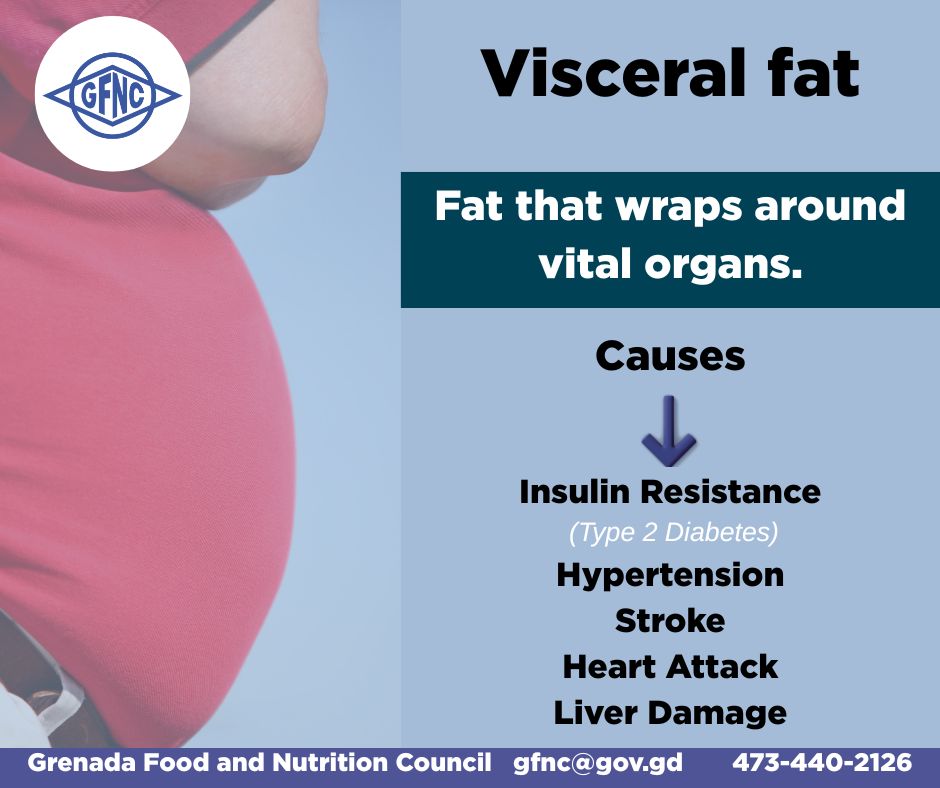
Visceral fat, which wraps around vital organs, is linked to diabetes, heart disease, and even early death. While not every protruding stomach means trouble, experts say it’s often a red flag worth taking seriously, and it can lead to metabolic syndrome.
Metabolic Syndrome is a set of conditions that put you at risk for developing diabetes, hypertension, high triglycerides, stroke, and heart attacks because that particular type of fat is active. It releases substances into the bloodstream that trigger inflammation, increase triglycerides, and disrupt several essential body processes
It increases triglycerides and toxic fat build-up. Visceral fat releases large amounts of triglycerides into the bloodstream. These fats collect in the muscles and liver, where they create toxicity and lead to insulin resistance. This means the body can no longer use insulin effectively, causing blood sugar levels to remain above normal levels.
It raises blood pressure. The same fatty deposits enter the blood vessels, creating plaque, stiffening the arteries, and contributing to hypertension. Stiff arteries send the body into “fight-or-flight” mode, increasing cortisol and further raising blood pressure and blood sugar levels.
It causes increased clotting and thickening. Visceral fat also increases fibrinogen, a substance that thickens the blood and promotes clot formation — raising the risk of stroke and heart attack.
It damages the liver. Excess triglycerides stored in the liver lead to non-alcoholic fatty liver disease, which can progress to cirrhosis and severe liver dysfunction.
Belly fat can creep up on a person for many reasons, including but not limited to stress, a sedentary lifestyle, high consumption of refined carbs and ultra-processed foods, and a diet low in fibre.
Together, these conditions form the dangerous cluster known as metabolic syndrome, and at the centre of it all is belly fat. In a recent episode of the Grenada Food and Nutrition Council’s (GFNC) Let’s Chat, nutritionist Keishon Williams provides a thorough explanation of this dangerous health condition and suggestions on how to combat it.
To learn more about the GFNC, visit https://gfnc.gov.gd/about-us/, and to follow us on social media, visit https://linktr.ee/473GFNC. To schedule a nutrition counselling session, call 473-440-2126 or email [email protected]. Eat Local: Strengthen Food and Nutrition Security in Grenada.
GFNC
NOW Grenada is not responsible for the opinions, statements or media content presented by contributors. In case of abuse, click here to report.