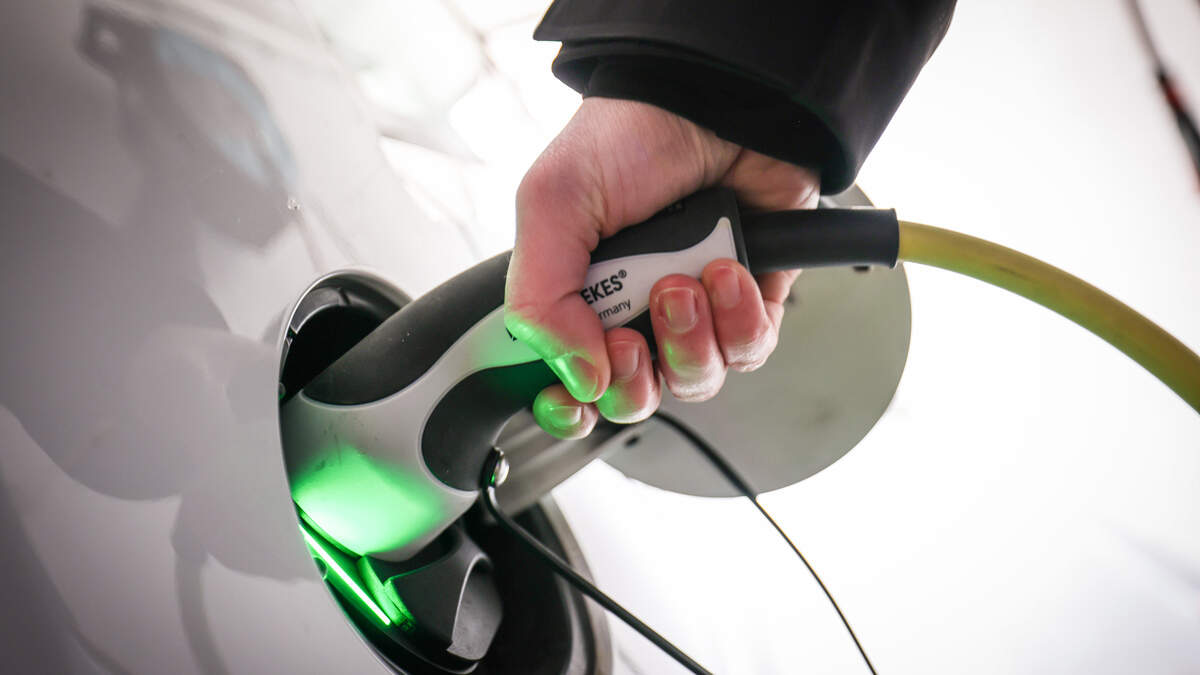
France is asking the European Union to adopt rules that require carmakers to assemble electric vehicles in the region, as nations continue to put forward different proposals in the bloc’s review on CO2 fleet emissions.
President Emmanuel Macron’s government wants EVs sold in Europe to include 75% of locally sourced parts, in line with the current content levels for vehicles powered by internal combustion engines, the country’s finance ministry said Wednesday. France already has a plan in place to incentivise locally produced EVs.
The ‘made in Europe’ measures are designed to avoid “significant” job losses in the industry as well as the risk of “losing the support of our citizens,” according to a statement. France’s Industry Minister Sebastien Martin and Ecological Transition Minister Monique Barbut on Tuesday met manufacturers and suppliers over a planned EU automotive relief package.
An uneven transition to EVs has left many manufacturers grappling with overcapacity, prompting the industry to push for changes to the EU’s plan to effectively ban new sales of vehicles with tailpipe emissions by 2035. Volkswagen has agreed to cut more than 35,000 positions by the end of the decade, while in France, Renault is reorganising some of its operations, which could lead to job losses.
France’s government is calling for “proportionate” protection of Europe’s car industry, with car-parts suppliers particularly exposed to Chinese competition, the finance ministry said.
Indicating the country is open to a trade-off, the ministry said France is “open to flexibilities” on the technologies picked to achieve CO2 emissions targets, provided there are incentives to retain a competitive industrial value chain in the region.
France had previously sided with Spain in demanding that the EU to stick with the 2035 targets. The position sparked concern among labour unions in the country worried that slower-than-expected demand for EVs will lead to factory closures.
German and Italian governments are pushing hard for the bloc to water down the effective ban. German Chancellor Friedrich Merz on Friday said his governing coalition wants the EU to allow plug-in hybrids, electric cars with combustion-powered range extenders as well as “highly efficient” conventional vehicles beyond 2035.
Industry leaders were hoping to secure the more flexible rules in a meeting in Brussels scheduled for 10 December but there could be a delay as the EU is still working on the relief package for the region’s automotive industry, EU’s Transport Commissioner Apostolos Tzitzikostas told media outlets on Monday.