Seen in a bigger picture, five years isn’t much time. Still, it’s long enough for novelties to wear off, for first impressions to fade and for the quiet truths of a place to reveal themselves.
When my partner and I moved to Armenia in 2020, we were not searching for a missing identity. We came from families and communities where being Armenian was not merely a weekend arrangement, not an accessory or a side project. Armenian school, church, Scouts, youth groups, big Armenian family gatherings — these shaped our upbringings and the rhythm of our lives long before we ever imagined living in Yerevan. But we wanted to see what it meant when Armenian life was not something to sustain, protect or defend, but simply something that existed around us.
We wanted to live where our language didn’t need justification, where Armenian wasn’t a choice but a starting point.
We arrived during the war. The country was quiet in the way that follows shock. Conversations were softer, and people moved with a certain deliberateness. But in the months that followed, that quiet turned into something else: anger, exhaustion, resentment. The grief that had united people briefly gave way to frustration, and the country seemed more divided than at any point in recent memory.
There was no easing into life here; the circumstances didn’t allow for it. And the years that followed offered little relief. Border villages were shelled again; more territory was lost; elections played out in a climate that felt strained and weary; the atmosphere around free expression began to constrict; a blockade tightened around Artsakh and then snapped, emptying a homeland while the world watched. There were weeks when the news never felt complete because the losses never fully paused long enough to be processed.
In the middle of all this, I began to understand that living here does not sharpen identity so much as it dissolves the performance of it.
The things that used to require intention — like speaking Armenian, observing our commemorations or understanding certain gestures and histories — became the background of everyday life. And that can feel grounding. A view from the Tigranashen lookout, over territory that Azerbaijan continues to press for in its list of four demanded enclaves, March 2025. (Photo courtesy of Rupen Janbazian)
But it can also feel heavy.
Armenia is not a museum. It is not a mere symbol (though lately, even our national symbols are dismissed or diminished by some). It is a country with emptying villages, poor infrastructure, hostile neighbors, a bureaucracy that works only sometimes, air that needs cleaning and a leadership that, in many ways, seems to be making grave missteps — especially in foreign affairs. There is no romance in discovering this. There is, however, clarity.
One of the unexpected privileges of living here is the ability to travel easily and to see places that once felt distant from North America. Flights are short, tickets are cheap and geography suddenly feels generous. We have taken advantage of it. Venice is next: $60 for a round-trip ticket. But what stays with me is not the ease of travel; it is the perspective it brings. I grew up, as many of us did, with the inherent assumption that North America was the center of the world. No one said it directly, but the environment simply made it feel true. Living here makes you understand how far from the truth that is and how much of the world sits just beyond that frame.
It is also a reminder of privilege. Holding a Canadian passport, in my case, and an American passport in my wife’s, grants us a kind of mobility that many people in Armenia do not have. It is a reality that often goes unacknowledged in the so-called repat community, especially among those who choose to live here without ever becoming Armenian citizens.
Leaving Armenia, even briefly, often sharpens the sense of how many Armenian worlds exist beyond it. Earlier this year, I spent some time in Jerusalem’s Armenian Quarter. It was warm, dust in the sunlight, the kind of heat that slows conversation. A group of young men was keeping watch over an open lot that carries a century of communal memory. They worked (read: volunteered) in shifts; someone always had coffee on, and dogs wandered in their makeshift shed. Nothing dramatic. Just presence, steadiness and a refusal to look away.
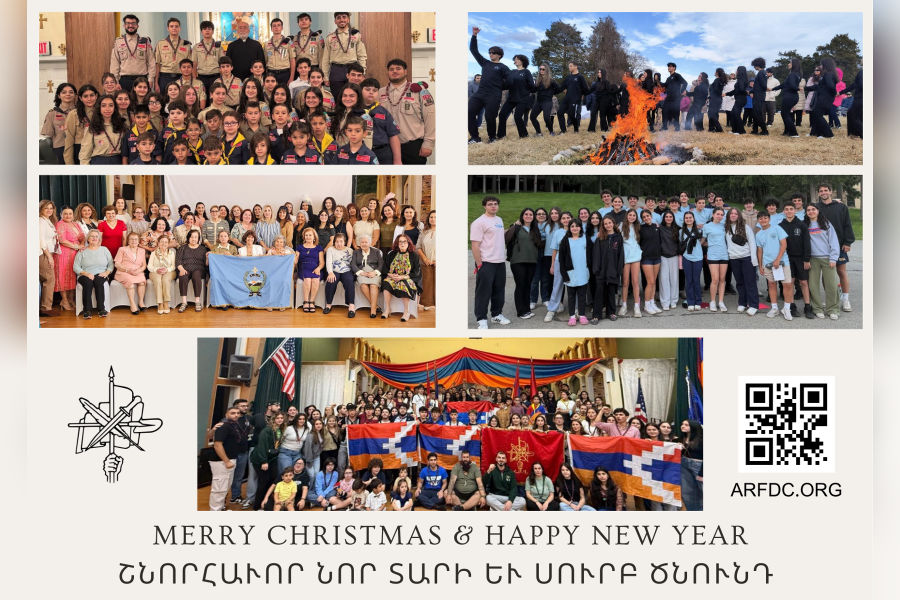
Around the same time, friends in Toronto were sending photos from the groundbreaking of the Armenian Youth Center expansion. Familiar faces, some of whom I have known since childhood, were now the ones making decisions that will shape that community for decades.
The settings could not have been more different, but the impulse was the same: to continue. To maintain something that does not survive on sentiment alone. If I have learned anything in the past five years, it is that continuity is not inherited; it is practiced, reinforced and often quietly defended every day, in ways that rarely appear heroic.
In our case, I have never been entirely comfortable with the term ‘repatriation.’ It implies a return to something whole and waiting — a return to where your family left. What we came to was not a memory preserved, and what we left behind was not a substitute.
In Toronto and Watertown, we lived Armenian lives (schools, churches, community halls and families that carried our language and customs with care), but there was always a distance, an awareness that we were sustaining something outside its natural context. Those communities didn’t dilute Armenian identity; they protected it. But they also made us curious about what it might feel like to live where that protection wasn’t necessary. If anything, they made our move here imaginable.
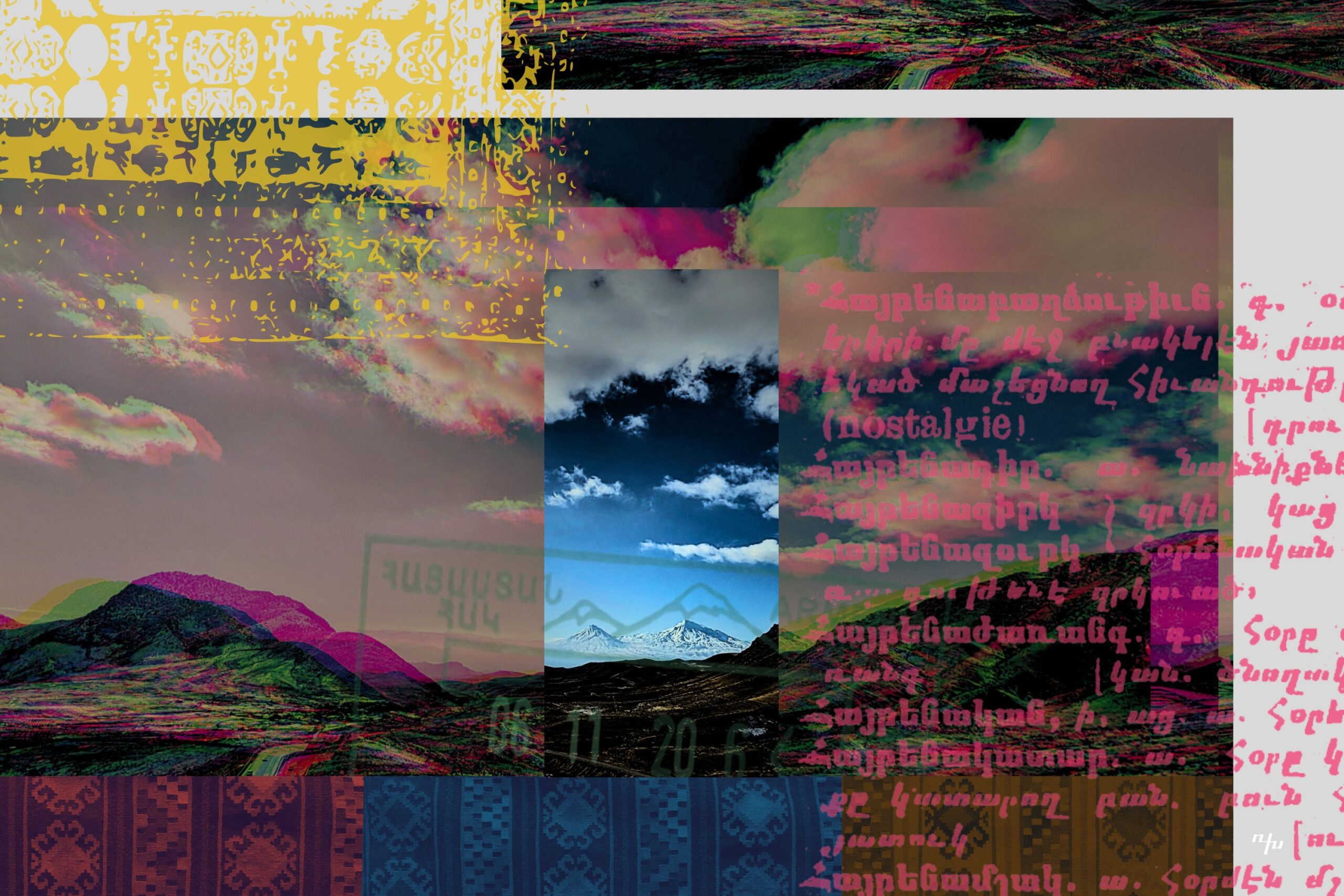
I don’t know if belonging comes all at once. It may be something that forms slowly, like sediment layering over time: conversations, seasons, people who show up when you need them most, neighbors who argue about parking but also check on each other, the view of Ararat on a clear autumn morning that still stops you for a second, even when you think you’ve gotten used to it.
Five years in, I don’t have a thesis. I don’t think living here makes anyone “more Armenian” (whatever that means). What it has given me is proximity — not just to history or language but to the texture of daily life, to the effort of understanding where you are and who you come from. To live here is to keep learning how to belong without pretending it’s simple.
Wherever we are, the thread remains the same: to care, to stay present, to not look away.
And maybe that is enough.