Overview:
Palau’s Senate is moving forward on a sweeping overhaul of the Controlled Substances Abuse Act, aiming to tackle the nation’s drug crisis while protecting constitutional rights. Lawmakers say the proposed changes strike a careful balance between stronger enforcement, expanded drug testing, and fairer sentencing. Here’s what the new amendments mean for public safety, government employees, and rehabilitation efforts.
By: Eoghan Olkeriil Ngirudelsang
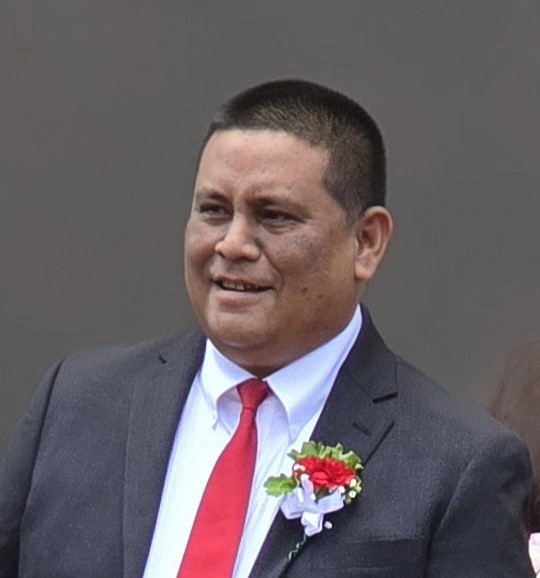
Senator Siegfried Nakamura, Chairman of the Senate Committee on Judiciary & Governmental Affairs, says the law must be tough to address the drug crisis but ensure people’s fundamental rights.
KOROR, Palau (Nov. 6) — “If we were to pass this bill requiring all employees to undergo drug testing, the courts of Palau will cast out this law and void it,” Senator Seigfried Nakamura warned as the Senate deliberated a sweeping amendment to Palau’s Controlled Substances Abuse Act. “The government under our Constitution cannot infringe people’s privacy rights or their rights against unlawful searches without their consent.”
The Senate last week began reviewing a major drug control bill initially proposed by President Surangel Whipps Jr. in January, seeking to strengthen enforcement while safeguarding fundamental rights. The bill, already passed by the House of Delegates, amends several sections of the Palau National Code (PNC) to expand drug testing requirements, increase criminal penalties, and establish new funding for enforcement and rehabilitation.
Balancing Enforcement and Constitutional Rights
The Judiciary and Governmental Affairs Committee, chaired by Nakamura, introduced key changes to the bill while retaining much of the original proposal. One central amendment affects Sections 419, 425, and 1202 of Title 33, governing salary step increases and drug testing protocols for civil service employees.
Under the amendment, drug testing will remain mandatory only for “designated employees” in safety-sensitive positions such as police, customs, immigration, and airport security. The Senate also expanded this category to include health professionals—doctors, nurses, lab technicians, radiologists, dentists—and operators of buses, boats, and heavy equipment, whose roles directly affect public safety.
For non-designated employees, mandatory drug testing would violate constitutional privacy rights. Instead, the Senate proposed that non-designated employees provide a negative drug test before qualifying for a salary step increase, making the process discretionary but still reinforcing accountability.
Stricter Penalties and Expanded Enforcement
The amended bill also states that anyone who tests positive for illegal substances may be prosecuted for possession of less than one gram of the drug detected, even if the precise quantity cannot be determined.
Additional provisions require state governments to enact drug testing regulations before receiving state block grants, and foreign workers must present a negative drug test result within ten days of arrival, along with their health certificates.
A new Drug Fine Collection Fund will direct 50% of collected fines to support the Bureau of Public Safety and Customs’ anti-drug efforts, while the remaining half will finance a Drug Rehabilitation Fund.
Emphasis on Rehabilitation and Fair Sentencing
In an unprecedented move, the Senate proposed creating sentencing guidelines that allow judges to consider factors such as prior offenses, remorse, cooperation, and age—particularly for offenders under 23 years old—when determining penalties. This flexibility enables courts to issue lighter sentences where warranted.
Employees dismissed after testing positive may also qualify for rehabilitation and future re-employment. After completing an approved rehabilitation program—whether in Palau, the Philippines, or Guam—and observing a one-year interval, individuals may be reinstated.
“In an example, if an employee is found positive for methamphetamine, he may go to a rehabilitation program recognized by the Ministry of Health and Human Services and be re-employed after one year, given that he completes such a program,” Nakamura explained.
Funding and Forward Plans
The bill authorizes $200,000 for a feasibility study to establish a national drug rehabilitation center and related programs under the Ministry of Health and Human Services. An additional $100,000 is allocated to purchase handheld spectrometers and an additional narcotics detection dog for the Division of Customs.
Another amendment ensures that plea bargains for inchoate crimes—such as attempt, solicitation, or conspiracy—carry sentences of no less than half the maximum penalty under the law.
As deliberations continue, the Senate aims to pass a law that balances enforcement and compassion—upholding public safety while protecting constitutional rights.
“The goal,” Nakamura said, “is to fight our drug crisis effectively without losing sight of the fundamental rights of our people.”
Like this:
Like Loading…