Chapman Reef, located off Au Island on the northwest corner of Lovangi in Papua New Guinea (PNG), has officially been confirmed as a world-class dive destination following a recent expedition by marine researcher Ali Green. The site, which was subject to rumours of being the “best diving in PNG, even the world,” lived up to its reputation, delivering sensational biodiversity.
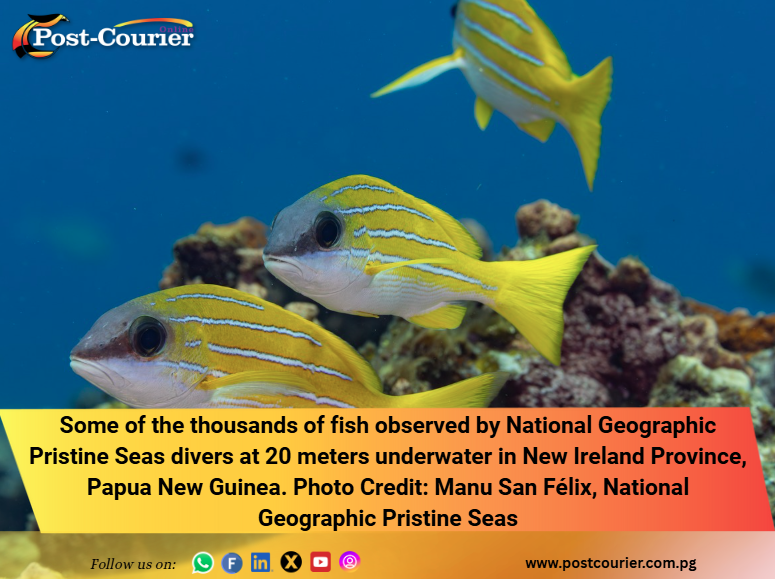
Some of the thousands of fish observed by National Geographic Pristine Seas divers at 20 meters underwater in New Ireland Province, Papua New Guinea.
“In fact, it was sensational and one of the most beautiful dives of our expedition!” Green reported.
The team focused their dive on two offshore reef structures, known as pinnacles, that ascend from the deep ocean to just 10 meters beneath the surface. Driven by strong ocean currents, the ecosystem proved to be extraordinarily productive, teeming with life across the food chain. The researchers encountered a chaotic yet mesmerising display of marine activity.
Some of the thousands of fish observed by National Geographic Pristine Seas divers at 20 meters underwater in New Ireland Province, Papua New Guinea.
Schools of planktivores swirled across the reef, attracting dense populations of predatory fish, which in turn drew in apex predators. The sheer density of marine life, including large schools of jacks, snappers, barracudas, and fusiliers, made the dive both a thrilling experience and a formidable challenge for those attempting to count the species.
The undisputed highlight of the dive was the sighting of a giant grouper at both pinnacles. The giant grouper is a magnificent species that can grow up to 2.7 meters (8 feet long) and live for over 100 years.
“That is very rare to see these days,” Green noted, underscoring the significance of witnessing such large, long-lived specimens in their natural habitat.
Some of the thousands of fish observed by National Geographic Pristine Seas divers at 20 meters underwater in New Ireland Province, Papua New Guinea.
Crucially, the Chapman Reef area falls within the Lovangai Marine Protected Area (MPA). While the area is still fished and provides an important food source for the local community, the MPA status ensures that destructive fishing methods are banned.
Researchers emphasised that this protective framework is key to the reef’s health. “We hope that the communities can continue to protect this special place well into the future,” the report concluded, highlighting the successful balance between conservation and sustainable local usage.
Some of the thousands of fish observed by National Geographic Pristine Seas divers at 20 meters underwater in New Ireland Province, Papua New Guinea.
The sensational condition of the reef structure serves as a prime example of the amazing productivity and vitality of PNG’s coral reefs when managed effectively.