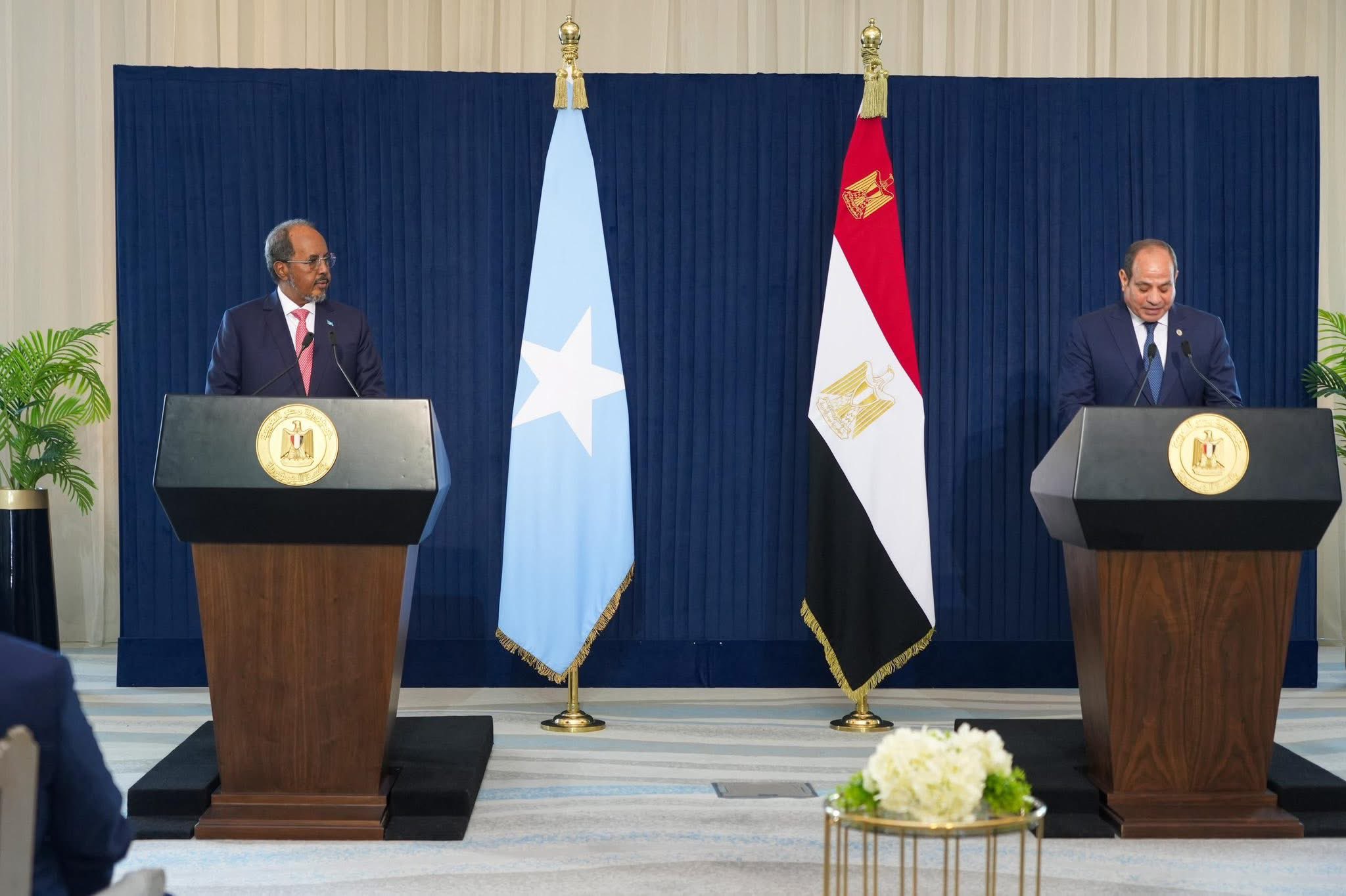
As Cairo’s influence in the Horn grows, Somaliland has a critical role in Egypt’s power struggle with Ethiopia
Egypt’s widening military and political footprint in Somalia—and mounting signs of quiet maneuvering in Somaliland—signal a new phase in the struggle for influence in the Horn of Africa.
For Ethiopia, a landlocked state seeking reliable access to the Red Sea, Cairo’s reemergence as a regional power broker presents not just a diplomatic complication but a direct challenge to its long-term strategic ambitions.
Cairo insists its growing role in Somalia is about upholding stability and defending Somali sovereignty.
Yet the pace and tone of its engagement suggest a deeper agenda: Reasserting Egypt’s primacy along the Red Sea corridor and constraining Ethiopia’s rise before it secures a maritime lifeline of its own.
Renewed Rivalry
In August 2024, Egypt and Somalia signed a military cooperation agreement that revived a relationship dormant for decades. The pact opened channels for arms transfers, training programs, and the possible stationing of Egyptian personnel in Somalia.
It came just months after Addis Ababa and Hargeisa signed a memorandum of understanding granting Ethiopia access to Somaliland’s coast and the right to build a naval facility there.
Cairo reacted sharply, condemning the deal and vowing to defend Somalia’s territorial integrity—a message calibrated as much for domestic audiences as for Mogadishu and Addis Ababa.
Egypt has since begun sending military aid to Somalia, its first such deliveries in decades. Officially, the shipments aim to bolster Somalia’s army against militant threats.
Unofficially, they serve as a geopolitical signal; a reminder that Egypt intends to shape the balance of power on the Horn’s northern flank and to counter what it perceives as Ethiopia’s encroachment toward the Red Sea.
Covert Calculus
There is, so far, no public evidence of Egyptian intelligence operations in Somaliland. But analysts point to a convergence of motives and patterns consistent with covert activity.
Egyptian officials have repeatedly framed any deal with Somaliland that bypasses Mogadishu as a violation of Somali sovereignty, language that does more than affirm principle; it subtly encourages Somaliland’s rivals to resist closer alignment with Ethiopia.
Strategically, Cairo has every incentive to limit Addis Ababa’s progress. A functioning Ethiopian naval presence on the Red Sea would mark a historic shift in regional power dynamics, giving Ethiopia leverage in both maritime security and trade routes.
For Egypt, long a dominant actor in Red Sea politics, that outcome would erode its influence at a time when its position on the Nile is already contested. Covert pressure—whether through sympathetic Somali factions, diplomatic manoeuvring, or targeted disinformation—offers a low-cost means of delay.
Somaliland’s role in this contest is pivotal. Its unrecognized but relatively stable government controls a stretch of coastline critical to Ethiopia’s future. If Addis Ababa succeeds in establishing a naval base there, it will gain strategic depth and symbolic independence.
If Cairo can dissuade Somaliland’s leaders or exploit their internal divisions, it can keep Ethiopia’s ambitions in check without firing a shot.
Strategic Crossroads
For Ethiopia, the stakes are high. Egyptian influence could inflame political rifts within Somaliland, complicate implementation of the January 2024 agreement, or isolate Addis Ababa diplomatically by casting its actions as violations of international norms. In a more volatile scenario, covert meddling could extend to sabotage, cyber interference, or the mobilization of regional proxies.
Ethiopia’s best defense lies not in confrontation but in precision and transparency. Clear, legally binding agreements with Somaliland would leave less room for external manipulation. Robust intelligence coordination could help detect and deter covert interference.
Addis Ababa also needs to take the diplomatic offensive, framing its coastal initiative not as expansionism but as a legitimate model for regional economic integration and security cooperation.
Engaging partners like Djibouti, Kenya, and select Gulf states would further dilute Egypt’s leverage by embedding Ethiopia’s maritime aspirations within a broader network of regional interests.
Navigating the Shadows
Ultimately, the contest unfolding in the Horn is less about ideology than about access and perception. Egypt’s mukhbarat—its intelligence apparatus—may not be visibly active in Somaliland, but the logic of influence does not always require presence.
Through diplomacy, aid, and narrative framing, Cairo is already shaping the environment in which Ethiopia’s maritime ambitions must operate.
Whether the struggle remains a war of words and persuasion or drifts toward a proxy confrontation will depend largely on how deftly Addis Ababa manages this new regional chessboard.
The Horn of Africa has seen many conflicts driven by pride, power, and proximity to the sea. The next one may unfold not in open battle, but in the shadows of diplomacy and intelligence, the quiet contest that defines the modern Red Sea rivalry.
Query or correction? Email us
While this commentary contains the author’s opinions, Ethiopia Insight will correct factual errors.
Main photo: From left: President Hassan Sheikh Mohamud and President Abdel Fattah El-Sisi at the Al-Alamein Presidential Palace, Egypt, July 2025. Source: Villa Somalia
Published under Creative Commons Attribution-NonCommercial 4.0 International licence. You may not use the material for commercial purposes.