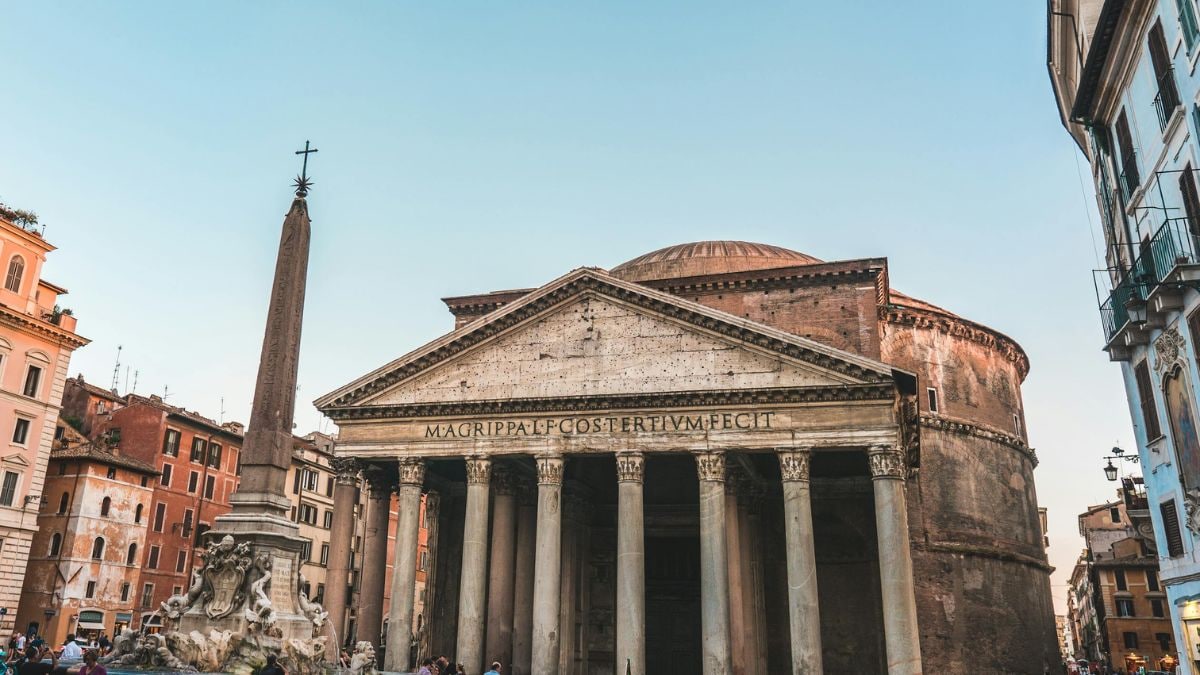
Ancient Roman structures have always been a major attraction for both common people and researchers. The durability of those magnificent architectural feats like the Pantheon of Rome has made researchers curious about how they are standing tall nearly after two thousand years of the height of the Roman empire. While The longevity of these structures can be attributed largely to Roman concrete, question still prevails about the speciality and the materials used in the concrete itself.
Ingredients of Roman concrete
According to the study published in the journal Science Advances, an international team of researchers led by the Massachusetts Institute of Technology (MIT) found that not only are the materials slightly different from what we may have thought, but the techniques used to mix them were also different.
One key ingrediant was pozzolan, or ash. The Romans used ash from the volcanic beds of the Italian city Pozzuoli and shipped it all over the empire. The silica and alumina in the ash react with lime and water in a pozzolanic reaction at ambient temperatures, resulting in a stronger, longer lasting concrete.
Another key ingredient is lime clasts, or small chunks of quicklime.
These clasts give Roman concrete its self-healing capability. Concrete weathers and weakens over time, but water can infiltrate its cracks and reach the clasts. When they react with the water, the clasts create crystals called calcites that fill in the cracks.
Difference with modern day cement
The high-temperature kiln process used today to make modern day Portland cement, grinds all materials into fine powder. It eliminates the lime clasts which results into the lack of the self-healing properties of Roman cement.
The Romans utilized a method known as hot mixing, which involves combining quicklime with pozzolan, water and other ingredients and then heating them up. The MIT team found that this method helps unlock the lime clasts’ self-healing abilities, and can result in faster setting than cement made with a quicklime-water solution called slaked lime.